
If you have seen "ashwagandha 1300 mg" on one bottle and 650 mg on another, the short answer is this: the two numbers usually describe different things, so the bigger number is not automatically the stronger dose. Ashwagandha labels list either a whole-root amount or a concentrated extract amount, and the research on stress has mostly used extracts in the 250 to 600 mg range. Ashwagandha+ gives you 650 mg of ashwagandha root in one capsule, once a day. Below, we walk through how to read the numbers, what the studies actually used, and how to choose an amount you can take consistently.
Key takeaways
- A bigger milligram number on the front of a bottle is not automatically a stronger dose.
- Most published stress studies used concentrated root extracts at 250 to 600 mg a day, taken for about eight weeks.
- Root and extract amounts are measured differently, so they cannot be compared one-to-one.
- Ashwagandha+ is one capsule a day with 650 mg of ashwagandha root and 5 mg of black pepper fruit.
- Consistency over several weeks matters more than chasing the largest number.
Ashwagandha 1300 mg vs 650 mg: what the numbers on the label mean
A bigger milligram number on the front of a bottle is not automatically a stronger dose. The number tells you the weight of an ingredient, but not what form that ingredient is in. Ashwagandha (Withania somnifera) reaches supplements in two main forms:
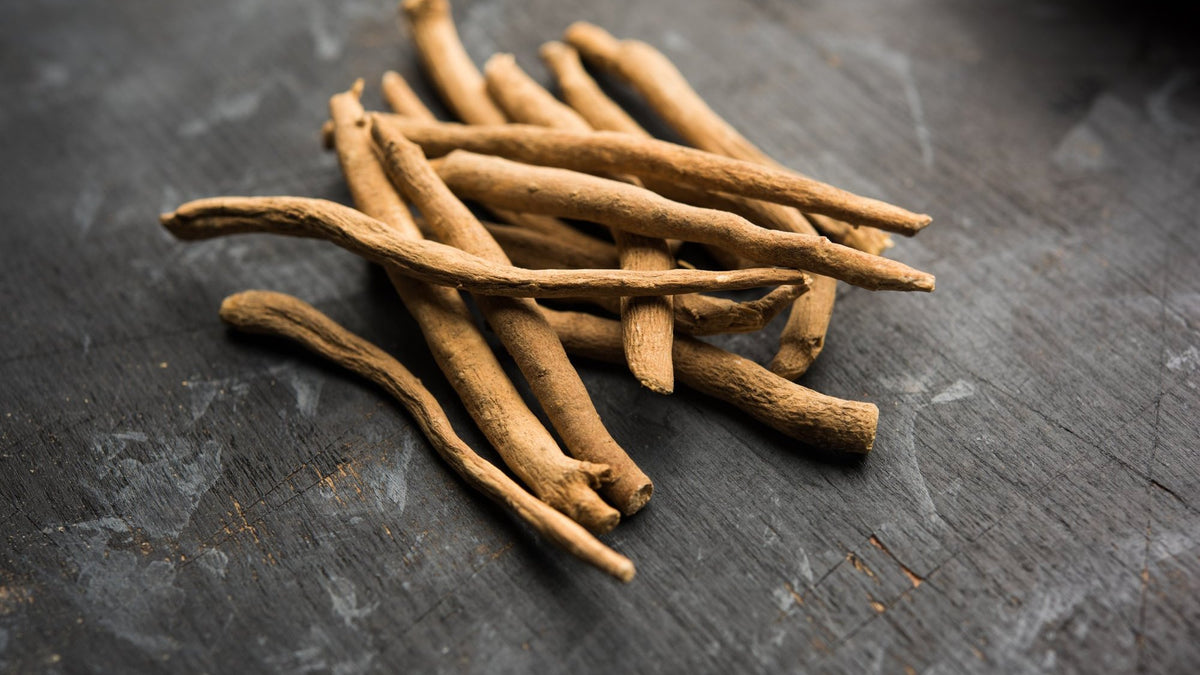
- Root (sometimes called root powder): the dried root, ground and encapsulated. The label amount is the weight of the root itself.
- Root extract: the root is soaked in a solvent (often water or a water-alcohol mix), the liquid is concentrated, and the result is dried. Extracts are often standardized to a percentage of withanolides, a group of naturally occurring compounds in the plant.
Because an extract is concentrated, a small number of milligrams can stand in for a much larger amount of raw root. That is why you may see one product list 1,300 mg across a two-capsule serving and another list 300 mg of extract, and the second is not necessarily "weaker." Root and extract amounts are measured differently, so they cannot be compared one-to-one.
Why "1,300 mg" shows up so often
Many bottles on the market are built around a two-capsule serving, so a typical pattern is a 1,300 mg serving made of two 650 mg capsules. When you see 1,300 mg, check the Supplement Facts panel for three things: the serving size (how many capsules), the form (root or extract), and any standardization percentage.
How much ashwagandha per day did the research use?
In most published stress studies, people took a concentrated root extract at 250 to 600 mg a day for about eight weeks. A few examples you can read yourself:
| Study | What participants took | Length |
|---|---|---|
| Chandrasekhar et al., 2012 | 600 mg a day of a root extract, split into two doses | 60 days |
| Salve et al., 2019 | 250 mg or 600 mg a day of a root extract | 8 weeks |
| NIH Office of Dietary Supplements summary | Trials commonly used extract amounts in the low hundreds of milligrams a day | Usually up to about 3 months |
In those trials, participants who took the extract reported lower perceived stress than those on a placebo, and the 2019 study saw changes at both amounts it tested. Research suggests the effect builds over weeks rather than hours. These were specific extracts at specific strengths; their numbers describe those study products, not any bottle on a store shelf, including ours.
Where Ashwagandha+ fits

Ashwagandha+ is one capsule a day with 650 mg of ashwagandha root and 5 mg of black pepper fruit. The label's suggested use is one capsule daily, preferably 20 to 30 minutes before a meal, so a 60-capsule bottle lasts 60 days. There is no proprietary blend: both active amounts are printed on the label, and the formula is caffeine-free.
We chose a simple, once-a-day serving because the routine you keep is the routine that counts. Ashwagandha is traditionally used to support the body's response to everyday stress, and Ashwagandha+ is made to support a healthy stress response and a steady, balanced mood.* Every batch is third-party tested for purity and potency, and it is manufactured in an NSF-certified, GMP-certified, FDA-registered U.S. facility. You can read how we test on our standards page.
How to choose an ashwagandha dose you can stick with
Consistency over several weeks matters more than chasing the largest number. A practical way to decide:
- Follow the label you are holding. Each product's suggested use is set for that product's form and strength. Do not exceed the recommended dose.
- Give it time. The studies above ran for about two months. Judge how you feel across weeks, not after a single capsule.
- Pick a time you will remember. Ashwagandha is not a stimulant, so morning or evening both work. Our guide to the best time to take ashwagandha walks through both options.
- Do not stack several ashwagandha products. If a stress blend, a sleep blend and a single-ingredient bottle all contain ashwagandha, the total adds up quickly.
- Talk to your healthcare provider first if you are pregnant or nursing, have a medical condition, or take medication.
Is more ashwagandha better?
Not necessarily. More milligrams of the same form can mean more of the plant, but published research does not show that doubling a serving doubles the result, and higher intakes raise the odds of stomach upset or drowsiness for some people. The NIH Office of Dietary Supplements notes that ashwagandha is generally well tolerated in studies lasting up to about three months, and that rare reports of liver problems have been linked to ashwagandha products. That is a good reason to stay with the amount on your label and to stop and talk to a professional if anything feels off.
If you want the bigger picture on how ashwagandha relates to the stress hormone cortisol, read Ashwagandha and Cortisol: What the Research Says About Stress.
Frequently asked questions about ashwagandha dosage
Is 1,300 mg of ashwagandha too much?
It depends on the form. A 1,300 mg serving of whole root is a very different amount of plant compounds than 1,300 mg of a concentrated extract. Read the Supplement Facts panel, follow that product's directions, and ask your healthcare provider if you are unsure.
Is 650 mg of ashwagandha enough?
Ashwagandha+ is formulated around one 650 mg capsule a day, which is the label's suggested use. Published studies used a range of amounts and forms, so there is no single number that is right for everyone. What matters most is taking the amount on your label consistently for several weeks.
Should I split my ashwagandha dose into morning and evening?
Some studies split their daily amount into two doses. Ashwagandha+ is designed as one capsule a day, so there is nothing to split; take it at whatever time you will remember, preferably 20 to 30 minutes before a meal.
How long should I take ashwagandha before judging it?
Most research ran for about eight weeks, and people often describe a gradual change rather than an immediate one. Give a consistent routine at least several weeks before deciding whether it fits you.
Why does Ashwagandha+ include black pepper?
Black pepper fruit is a traditional companion to botanicals in many formulas. Ashwagandha+ lists 5 mg of black pepper fruit on its label alongside the ashwagandha root, with no proprietary blend.
Related reading from our Wellness Hub
- How to Take Ashwagandha+: A Steady Daily Routine
- Adaptogens 101: What Is an Adaptogen? Ashwagandha and Mushrooms
Sources
- NIH Office of Dietary Supplements: Ashwagandha fact sheet for health professionals
- Chandrasekhar K, et al. A randomized, double-blind, placebo-controlled study of ashwagandha root extract in reducing stress and anxiety in adults. Indian J Psychol Med. 2012.
- Salve J, et al. Adaptogenic and anxiolytic effects of ashwagandha root extract in healthy adults. Cureus. 2019.
- NCCIH: Ashwagandha
Individual results vary.
*These statements have not been evaluated by the Food and Drug Administration. This product is not intended to diagnose, treat, cure, or prevent any disease.

