
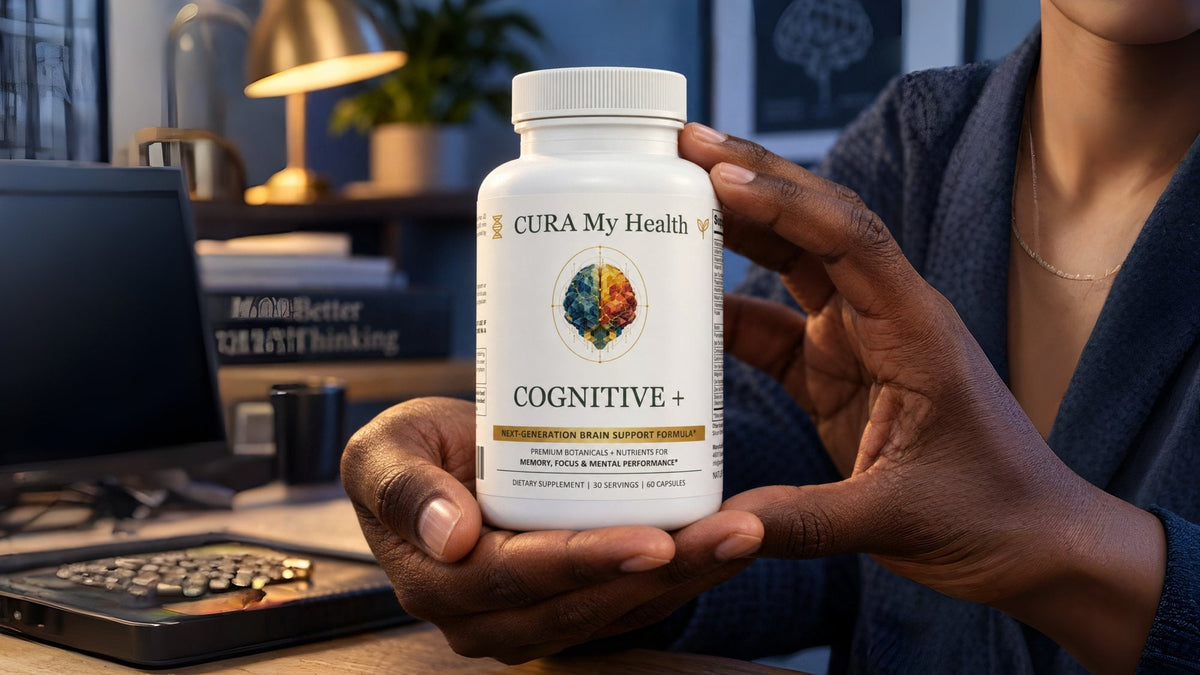
What helps brain fog? For most everyday fog, start with four habits before anything else: protect your sleep, bring stress down a notch each day, eat and drink on a steady rhythm, and set up your work so attention is not split ten ways. These basics move focus more than any capsule can. This guide gives you a one-week plan for each habit, explains where supplements fit, and lists the signs that mean it is time to see a clinician instead.
Key takeaways
- Brain fog is not a medical term; people use it for slow thinking, poor focus and forgetfulness.
- Sleep is the first habit to check, because short or broken sleep affects attention the next day.
- A steady breakfast or lunch with protein, plus enough water, keeps many people clearer through the afternoon.
- Supplements belong after the basics, not instead of them.
- Fog that is new, getting worse or comes with other symptoms deserves a visit to a clinician.
What is brain fog?
Brain fog is not a medical term; people use it for slow thinking, poor focus and forgetfulness. You read the same paragraph three times, lose the word you wanted, or walk into a room and forget why. It often tracks with daily life: a run of short nights, a stressful month, skipped meals, too much screen-switching. Because the causes are so often ordinary, the first steps are ordinary too.
What helps brain fog? Start with sleep
Sleep is the first habit to check, because short or broken sleep affects attention the next day. The National Heart, Lung, and Blood Institute recommends seven to nine hours a night for adults and points to a regular schedule as one of the most useful sleep habits.
- Fix the wake time first. Get up at the same time every day, weekends included. Bedtime tends to follow.
- Get daylight early. Ten minutes outside in the morning helps set your body clock.
- Set a caffeine cutoff. Many people sleep better with no coffee, tea or caffeinated supplements after early afternoon.
- Build a short wind-down. Dim lights, put the phone away and do the same quiet routine each night. Our wind-down ritual guide has a step-by-step version.
If you snore loudly, wake gasping, or feel exhausted after a full night in bed, mention it to a clinician; those are not habit problems.
How does stress cause brain fog?
Short bursts of stress sharpen you. Stress that never switches off does the opposite: it crowds working memory, disturbs sleep and makes it harder to settle into one task. The National Center for Complementary and Integrative Health describes several approaches people use to manage stress, including deep breathing, progressive muscle relaxation, mindfulness meditation and yoga.
- Take two-minute resets. A slow breathing pattern such as the physiological sigh between meetings is easy to repeat.
- Write the worry down. A short list at the end of the day moves open loops out of your head.
- Walk. Even a 10-minute walk counts toward the 150 minutes of moderate activity a week that the CDC recommends for adults, and it is one of the simplest ways to clear your head mid-day.
Food and water: what to eat for brain fog
A steady breakfast or lunch with protein, plus enough water, keeps many people clearer through the afternoon. Long gaps between meals, a sugar-heavy breakfast, or a lunch eaten at the keyboard can all leave you flat by mid-afternoon.
- Anchor two meals. Include protein (eggs, yogurt, fish, beans, chicken) and some fiber at breakfast and lunch.
- Drink before you are thirsty. Keep water on your desk and refill it at set times.
- Eat fish once or twice a week. Fatty fish such as salmon and sardines supply the omega-3 DHA, which is a structural fat in the brain.
- Know the nutrient checks. The NIH Office of Dietary Supplements lists tiredness and problems with memory among the signs of low vitamin B12. Low iron can also leave people tired. A simple blood test answers both questions; guessing does not.
Focus habits that make a real difference
Attention is a limited resource, and modern work spends it fast. A few changes to how you work can feel like the fog lifting.
| Habit | What to try this week |
|---|---|
| Single-tasking | Work in one 30-45 minute block on one task, with email and chat closed. |
| Notifications | Turn off every alert that is not from a person who needs you today. |
| Hardest task first | Put the task that needs the most thought in your clearest hour, usually the morning. |
| Caffeine on purpose | Use it for one focused block, not all day. The FDA cites 400 mg a day as an amount not generally linked with negative effects in healthy adults. |
| Real breaks | Stand, look out a window or walk for five minutes between blocks instead of scrolling. |
Where do supplements fit for brain fog?
Supplements belong after the basics, not instead of them. If your sleep, meals and stress are reasonably steady and you still want support, two formulas in our focus range take different approaches.
- Cognitive +™ pairs a 609 mg proprietary blend (including DMAE, bacopa, GABA, phosphatidylserine, DHA from tuna and huperzine A) with twenty-two vitamins and minerals, and is formulated to support focus, concentration, mental clarity, energy levels and alertness.* Blend totals are on the label; the amounts inside each blend are not. Its green tea extract is a natural source of caffeine, and the formula contains iron, soy and fish.
- Lions Mane 10x+™ is a caffeine-free blend of ten mushrooms, formulated to support cognitive function, mental clarity and healthy energy levels.*
Both are taken as two capsules once a day, 20-30 minutes before a meal. Read each label's warnings, and check with your clinician first if you are pregnant or nursing, take medication, or have a medical condition. Every batch is third-party tested for purity and potency; see our standards.
When should you see a clinician about brain fog?
Fog that is new, getting worse or comes with other symptoms deserves a visit to a clinician. Book an appointment if any of these apply:
- it lasts more than a few weeks even after you have improved sleep and meals;
- it started with a new medication or after an illness;
- it comes with unusual tiredness, low mood, weight change, numbness or tingling;
- other people have noticed changes in your memory or speech.
A clinician can check things a habit plan cannot, such as thyroid function, iron and B12 levels, sleep problems and medication side effects. Seek urgent care for sudden confusion, trouble speaking, or weakness on one side of the body.
Frequently asked questions about brain fog
What helps brain fog fastest?
For everyday fog, a full night of sleep, a proper meal with protein, a glass of water and a short walk often help within the same day. Lasting change usually comes from keeping those habits for a few weeks.
Can lack of sleep cause brain fog?
Yes. Short or broken sleep affects attention, memory and reaction time the next day. A regular wake time and a caffeine cutoff are the two easiest places to start.
What should I eat for brain fog?
Aim for regular meals that include protein and fiber, fish once or twice a week, and enough water through the day. Long gaps between meals and sugar-heavy breakfasts often make afternoon fog worse.
Do focus supplements help with brain fog?
Some ingredients have been studied for attention and mental performance, but supplements work best on top of steady sleep, meals and stress habits. Read the label, note any caffeine, and talk to your clinician if you take medication.
When is brain fog a reason to see a doctor?
See a clinician if fog is new, getting worse, lasts several weeks despite better habits, or comes with other symptoms. Sudden confusion or trouble speaking needs urgent care.
Related reading from our Wellness Hub
- Brain and Focus Supplement: Meet Cognitive +
- How to Beat the Afternoon Slump Without Caffeine
- Wired and Tired: Understanding Cortisol and Stress
Sources
- NHLBI: Healthy Sleep Habits
- NHLBI: How Much Sleep Is Enough?
- NCCIH: Stress
- CDC: Physical Activity Guidelines for Adults
- NIH Office of Dietary Supplements: Vitamin B12
- FDA: Spilling the Beans: How Much Caffeine Is Too Much?
Individual results vary.
These statements have not been evaluated by the Food and Drug Administration. This product is not intended to diagnose, treat, cure, or prevent any disease.

