Curcumin has become one of the most-searched natural options for joint discomfort, and it's also one of the most overstated. If you've been looking into curcumin for joint pain and want the research-based version rather than the marketing version, here's a clear-eyed breakdown of what curcumin actually does, how it compares to other approaches, and where the real evidence stands.

What is curcumin, exactly?
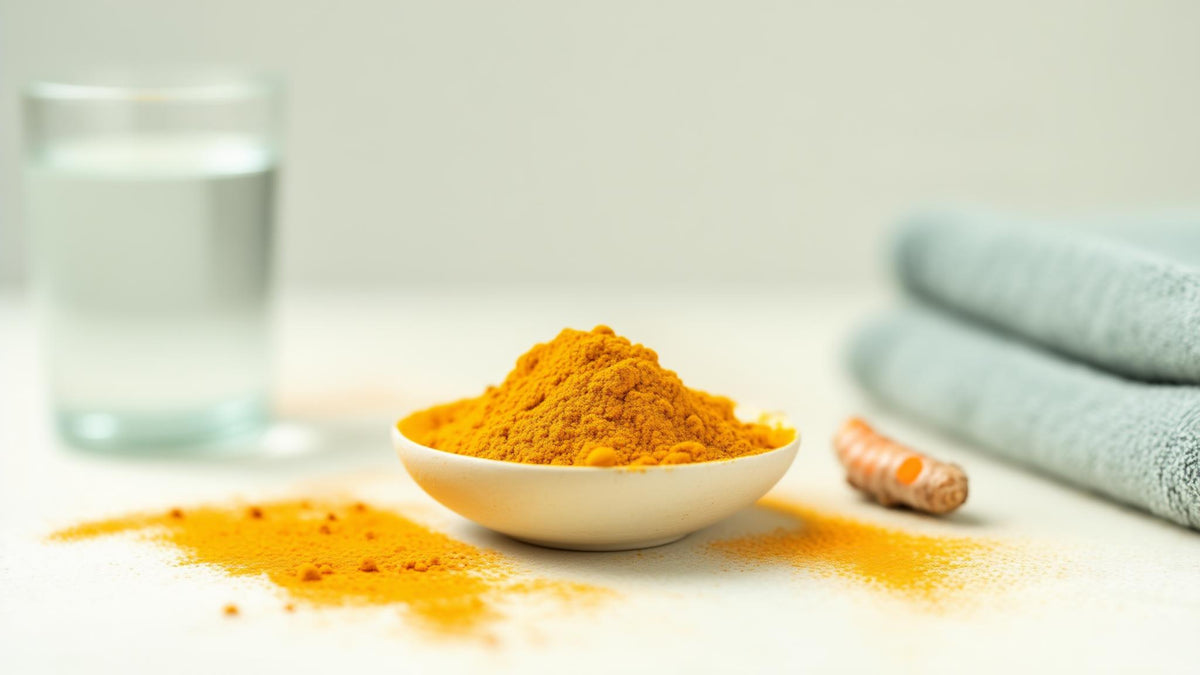
Curcumin is the primary curcuminoid — the main active compound family — found in turmeric root. It's what gives turmeric its yellow-orange color and is the specific compound most joint-related research actually studies, as opposed to whole turmeric powder generally. Curcumin makes up only a small percentage of turmeric root by weight, which is the central reason standardized extracts exist: to deliver a consistent, measurable amount rather than whatever happens to be in a given spoonful of ground spice.
What does the joint research on curcumin actually show?
This is a genuinely substantial and still-growing research area. A systematic review and meta-analysis of randomized controlled trials found curcumin and Curcuma longa extract associated with improvements in arthritis symptoms across the trials studied (PubMed). It's worth being precise about the limits of this evidence: results vary by curcumin formulation, dose, and how long each trial ran, and curcumin research overall is younger and less uniform than, say, the multi-decade glucosamine research base. That doesn't make the findings meaningless — it means describing them honestly as promising and research-backed, not as settled or universal.
To be clear about what this means: curcumin supplements are dietary supplements, not a treatment for diagnosed osteoarthritis, rheumatoid arthritis, or any other joint disease. This research describes structure-and-function-level support for joint comfort and a healthy inflammatory response — not a cure, and not a substitute for a doctor's evaluation of ongoing joint pain.*
How does curcumin compare to an NSAID like ibuprofen or diclofenac?
This is one of the more interesting, specific comparisons in the research. A randomized, open-label, parallel-arm study directly comparing curcumin to diclofenac (a common prescription NSAID) in knee osteoarthritis found curcumin to be comparably effective, with a more favorable gastrointestinal safety profile in that trial (PubMed). This is a genuinely notable finding worth taking seriously — and also a single trial, not a settled conclusion that curcumin universally replaces NSAIDs. Anyone currently taking a prescribed NSAID or other joint medication should talk with their doctor before changing their routine, rather than substituting a supplement on their own based on one study.
Why does absorption come up so much with curcumin?
Because it's a real, well-documented limitation. On its own, curcumin is poorly absorbed by the digestive system and rapidly cleared by the body, meaning relatively little reaches the bloodstream from a standard dose. A landmark pharmacokinetic study found that combining curcumin with piperine, the active compound in black pepper, measurably increased curcumin's bioavailability in human volunteers (PubMed). This is the research basis for why so many curcumin products, including formulations with BioPerine® black pepper extract, pair curcumin with an absorption enhancer rather than leaving it to work alone.
What other approaches exist besides piperine?
Piperine-paired formulas are common, but they're not the only absorption strategy on the market. Some products use liposomal delivery (encapsulating curcumin in a fat-based particle), phytosome technology (binding curcumin to a phospholipid), or nanoparticle formulations, each attempting to solve the same underlying absorption problem through different means. Research directly comparing these approaches head-to-head is more limited than the piperine research specifically, so it's reasonable to view piperine-based enhancement as the most established, longest-studied option among several reasonable choices, rather than the only valid one.
What's the difference between curcumin's effect on pain vs. inflammation markers?
These are related but distinct outcomes that research measures separately. Pain is typically self-reported by trial participants using standardized scales, while inflammatory markers are measured directly in blood samples — things like C-reactive protein or specific cytokines. Curcumin research has shown effects on both, but they don't always move in perfect lockstep within a given trial; someone can show measurable improvement in an inflammatory marker without a proportional change in reported pain, or vice versa. This is a normal feature of nutrition and supplement research generally, not something specific to curcumin, and it's part of why "curcumin reduces inflammation" and "curcumin reduces pain" are related but not perfectly interchangeable claims.
Does the type of joint condition matter?
Most of the strongest curcumin research specifically involves knee osteoarthritis, simply because it's the most common and most-studied joint condition in clinical trials generally. Research on curcumin in other joint conditions — rheumatoid arthritis, for instance, which involves a different underlying disease process — exists but is a smaller, separate body of evidence. It's reasonable to view the knee osteoarthritis research as the strongest, most directly applicable evidence, while being cautious about extending those specific findings to a different diagnosed condition without your doctor's input.
How much curcumin do research studies typically use?
Doses vary meaningfully by study and formulation, but joint-related research commonly uses somewhere in the range of 500 mg to 1,000 mg of curcumin or standardized curcuminoid extract daily, often split across two doses. This is a case where comparing products by total milligrams alone can be misleading — a product listing "turmeric" broadly versus one specifying a standardized percentage of curcuminoids (commonly 95%) may deliver very different actual curcumin amounts despite similar-looking label numbers.
Does timing or food matter for curcumin specifically?
Yes, in a practical way. Curcumin is fat-soluble, meaning it's better absorbed when taken alongside a meal that includes some dietary fat rather than on an empty stomach. Splitting a daily curcumin dose into two smaller doses — commonly with breakfast and dinner — is a pattern used in a number of research protocols, partly because curcumin is cleared from the body relatively quickly, so sustaining more consistent levels across the day can make more sense than a single large dose.
Is curcumin safe to take long-term?
Curcumin has a generally favorable safety record in research at studied doses, but it's not without considerations. It may have mild blood-thinning properties in some research, so anyone on blood thinners or with an upcoming surgery should talk with their doctor first. High doses have occasionally been associated with digestive upset. Curcumin can also affect how the body metabolizes certain medications, so mentioning it to your doctor or pharmacist if you take prescription medication is a reasonable precaution rather than an overreaction. As with any supplement: pregnant or nursing mothers, anyone under 18, and anyone with a known medical condition should consult a physician before starting.
Frequently asked questions
Should I replace my prescribed NSAID with curcumin?
Not without talking to your doctor first. While the diclofenac-comparison research is genuinely interesting, it's one study, and joint medication decisions should involve your doctor, especially if you have a diagnosed condition being actively managed.
Is curcumin the same thing as turmeric?
No — curcumin is one specific compound family within turmeric root, and the one most clinical research actually studies. Whole turmeric contains curcumin along with many other compounds, but in much smaller, less standardized amounts.
How long before I'd notice anything?
Individual results vary. Most curcumin research measuring meaningful change uses several weeks to a few months of consistent daily use — this isn't a same-day pain reliever.
Does cooking with turmeric give me a meaningful curcumin dose?
Not close to what's used in research. Culinary turmeric is flavorful and has its own place in a healthy diet, but the curcumin content in a typical serving is far below standardized supplement doses.
Can I take curcumin alongside glucosamine and chondroitin?
Yes — they work through different, complementary mechanisms (structural cartilage support vs. inflammatory response), which is exactly why many joint formulas combine them rather than choosing one over the other.
Where this leaves you
Curcumin has a real, if still-developing, research base for joint comfort, with genuinely interesting findings on its comparison to NSAIDs and a well-documented absorption challenge that thoughtful formulation can address. If you want a formula built around a standardized curcuminoid extract with absorption support, our Platinum Turmeric+ guide covers exactly what's on the label.
Sources
- Efficacy and Safety of Curcumin and Curcuma longa Extract in the Treatment of Arthritis: A Systematic Review and Meta-Analysis of Randomized Controlled Trial — PubMed
- Safety and efficacy of curcumin versus diclofenac in knee osteoarthritis: a randomized open-label parallel-arm study — PubMed
- Influence of piperine on the pharmacokinetics of curcumin in animals and human volunteers — PubMed
Individual results vary.
These statements have not been evaluated by the Food and Drug Administration. This product is not intended to diagnose, treat, cure, or prevent any disease.