
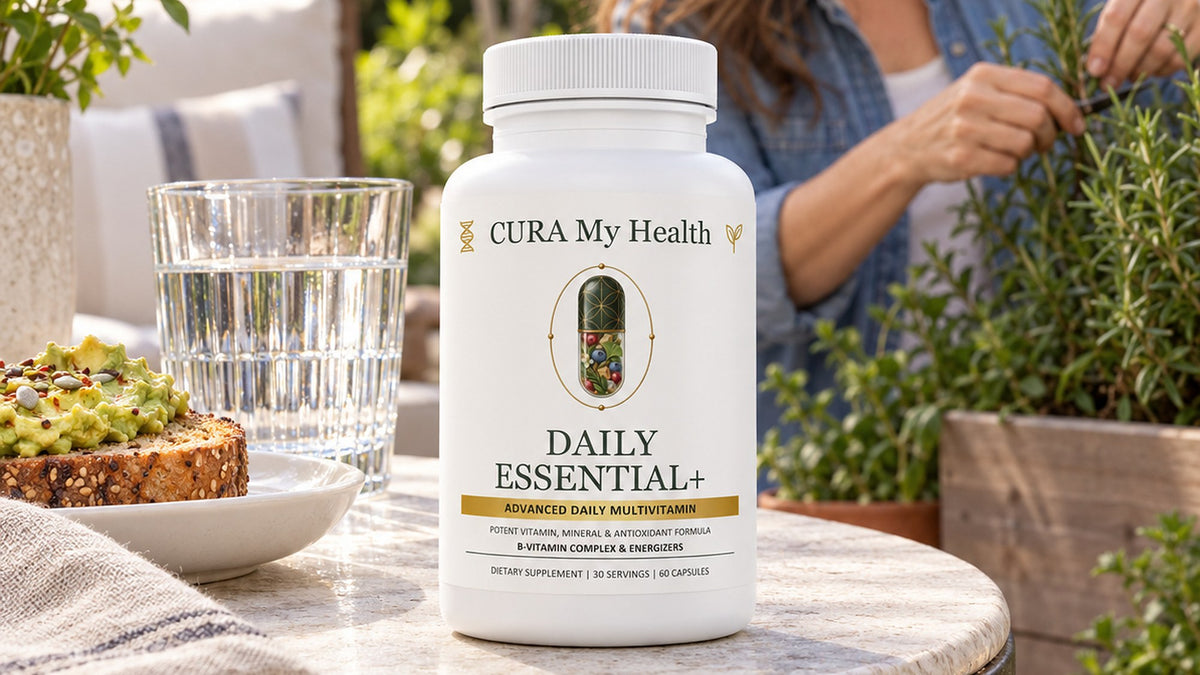
Even when you eat thoughtfully, real life can make consistency hard. Busy mornings, rushed lunches, and changing needs can leave small gaps. A clean multivitamin for adults is not a replacement for good food; it is a simple way to help cover everyday nutritional bases.
Key takeaways
- A clean multivitamin for adults is not a replacement for good food; it is a simple way to help cover everyday nutritional bases.
- Choose a clear label (each active with its amount, or the blend total), sensible amounts, third-party testing, and D3 rather than D2.
- Taking a multivitamin with a meal may feel gentler on the stomach; follow the timing on your label.
- Unsure about iron, medications or other supplements? Go over the label with your healthcare provider.
Do I need a clean multivitamin if I eat healthy?
Maybe. A varied diet comes first, but no one eats perfectly every day. A multivitamin can help fill routine nutrient gaps while supporting energy metabolism and normal immune function. Think of it as a foundation, not a shortcut—and ask your healthcare provider about bloodwork or individual needs.
What should people look for?
Start with a clear label (each active with its amount, or the blend total), sensible amounts, and third-party testing. Choose capsules or tablets you can take consistently; gummies can be convenient, but they may contain added sugar and may not include every nutrient you want. If you are unsure about iron, medications, or other supplements, review the label with your healthcare provider.
Is morning or night better for a multivitamin?
For Daily Essential+™, the label directs two capsules in the morning with a meal, which is also gentler on the stomach. Pair it with an existing habit—your morning water, coffee, or first meal—to make consistency easier.
Daily Essential+ offers a simple daily foundation and is third-party tested, every batch. Blend totals are on the label; the amounts inside each blend are not. For a wider starting point, see Supplements: Where to Start.
Do You Need Iron in a Multivitamin?
Iron needs differ from person to person, and Daily Essential+ lists no iron on its label. Ask your healthcare provider before choosing a formula with iron — taking a high-iron formula unnecessarily can do more harm than good.
Does a Multivitamin Replace Targeted Supplements?
No — a multivitamin covers broad nutritional bases at modest doses, while targeted formulas like magnesium glycinate or collagen deliver the higher, specific amounts research on those individual benefits actually used.
How Do You Know If a Multivitamin Is High Quality?
Look for D3 rather than D2, a clear label that shows each active with its amount, or the blend total, and third-party testing — the same standards worth applying to any supplement you take daily.
Frequently asked questions about a clean multivitamin
What makes a multivitamin "clean"?
No artificial dyes, no added sugar, no unnecessary fillers, and a label that shows each nutrient and its amount, or the blend total. Clean also means made in a GMP-certified facility and tested by an outside lab.
Can a multivitamin upset my stomach?
It can if taken on an empty stomach, mostly because of the minerals. Taking it with breakfast or lunch solves this for most people.
Should I take a multivitamin every day or only when my diet is poor?
Daily. A multivitamin works as a steady baseline, and skipping it on good-diet days makes it harder to keep the habit at all.
Is a specialty multivitamin different from a general one?
Some formulas adjust iron down and pay more attention to bone-supporting nutrients such as vitamin D and K2. Read the label rather than the front of the box.
Can I take Daily Essential+ with other CuraMyHealth products?
Yes. It is designed as the foundation under targeted formulas such as Magnesium Glycinate+ or Ashwagandha+. Check with your doctor if you take medication or other high-dose vitamins. Do not use Daily Essential+ if you are pregnant or lactating, as its label directs.
Sources
- Multivitamin/mineral Supplements, Health Professional Fact Sheet — NIH Office of Dietary Supplements
- Inadequacy of Immune Health Nutrients: Intakes in US Adults, the 2005–2016 NHANES (Nutrients, 2020) — PubMed
- Vitamin D, Health Professional Fact Sheet — NIH Office of Dietary Supplements
- Iron, Health Professional Fact Sheet — NIH Office of Dietary Supplements
These statements have not been evaluated by the Food and Drug Administration. This product is not intended to diagnose, treat, cure, or prevent any disease. Individual results vary.

