
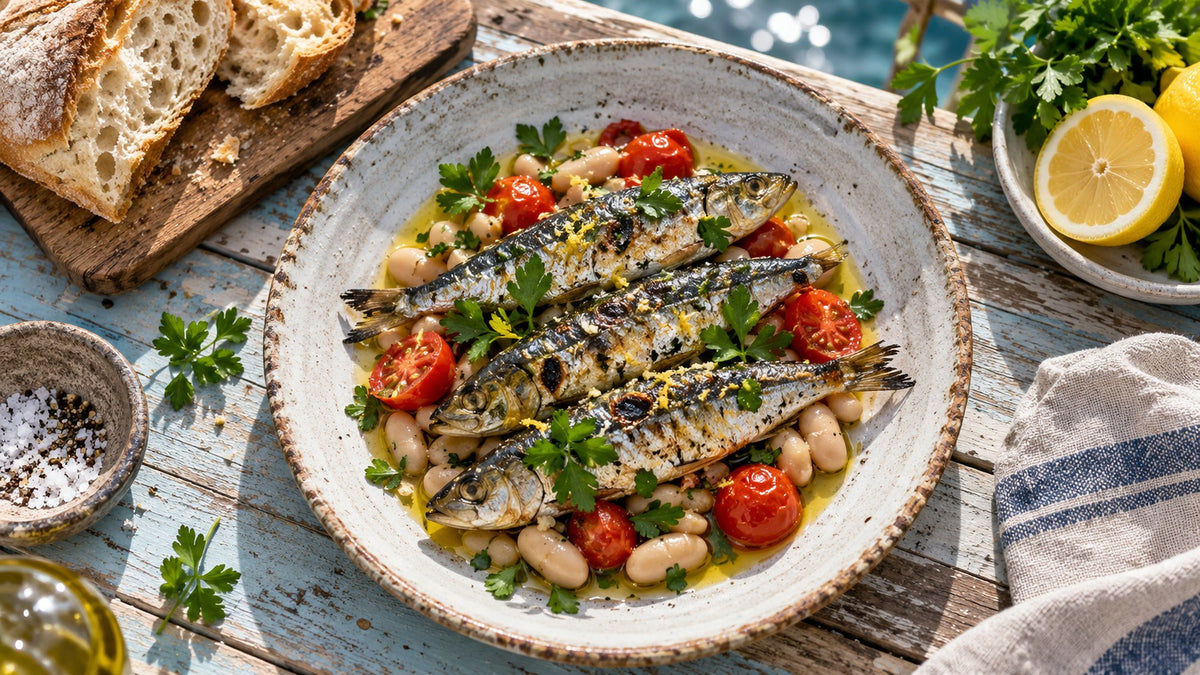
Food and mood are connected, but not in the "eat this one food and feel happy" way that headlines suggest. The clearest link is the overall pattern: regular meals that keep energy steady, enough protein, omega-3 fats from fish, B vitamins from greens and beans, plenty of fiber, enough water, and sensible limits on caffeine and alcohol. This guide covers what the studies show, easy daily habits, and where a supplement such as 5-HTP+ can fit if you want extra support.
Key takeaways
- The strongest research on food and mood looks at whole eating patterns, not single foods.
- Meals at regular times, built around protein, fiber and slow carbohydrates, help keep energy steady through the day.
- Fatty fish such as salmon, sardines and mackerel are the main food sources of the omega-3s EPA and DHA.
- Changing daily water intake by about 1.5 liters for three days changed how people rated their mood in a small controlled study.
- If low mood lasts for two weeks or more, or gets in the way of daily life, talk with a doctor or a mental health professional.
Is there a real link between food and mood?
Yes. The best-known study is the SMILES trial, published in 2017. It enrolled 67 adults with major depression, most of whom were already under a doctor's care. For 12 weeks, one group met with a clinical dietitian for seven sessions to improve their everyday eating; the other group received social support visits on the same schedule. The diet group showed a significantly greater improvement in symptom scores than the social support group. It was a small study, and the diet was an add-on to their usual care, not a replacement for it.
A 2019 meta-analysis pulled together 16 randomized trials with more than 45,000 participants, most of them from the general population. Improving diet produced a small but real reduction in self-reported low-mood symptoms. It did not find a clear effect on anxiety. In plain terms: eating well is not a fix for everything, but the pattern of what you eat does seem to matter for how you feel. The strongest research on food and mood looks at whole eating patterns, not single foods.
Which nutrients matter most for a balanced mood?
No single nutrient explains the link, but a few come up again and again.
| Nutrient | Why it comes up | Everyday food sources |
|---|---|---|
| Omega-3s (EPA and DHA) | Structural fats in brain and nerve cell membranes | Salmon, sardines, mackerel, herring, tuna; walnuts, chia and flaxseed supply ALA |
| Folate | A B vitamin the body needs to make DNA and new cells; low levels have been linked with low mood | Spinach and other dark leafy greens, asparagus, brussels sprouts, oranges, beans, peas, peanuts |
| Protein (tryptophan) | Tryptophan is the amino acid the body uses to make 5-HTP and then serotonin | Eggs, poultry, fish, dairy, beans, tofu, seeds |
| Fiber | Slows digestion for steadier energy and feeds gut bacteria | Oats, beans, lentils, vegetables, fruit, whole grains |
On folate, the NIH Office of Dietary Supplements notes that people with low blood levels of folate might be more likely to have depression, and that more research is needed on whether folate supplements help alongside usual care. That is an association, not proof that extra folate lifts mood. Fatty fish such as salmon, sardines and mackerel are the main food sources of the omega-3s EPA and DHA. For more on the B vitamins, see our guide Do B Vitamins Help With Stress?
How do meal timing and blood sugar affect how you feel?
Long gaps between meals, or meals built mostly on refined sugar, can leave energy rising and falling through the day. Meals at regular times, built around protein, fiber and slow carbohydrates, help keep energy steady through the day.
A simple way to build that kind of plate:
- Half the plate: vegetables or fruit, ideally in two or three colors.
- A quarter: a protein such as fish, eggs, chicken, beans or tofu.
- A quarter: a slow carbohydrate such as oats, brown rice, barley, quinoa, beans or whole-grain bread.
- A little healthy fat: olive oil, nuts, seeds or avocado.
Food and mood habits: water, caffeine and alcohol
Water
Hydration is easy to overlook. In a small 2014 controlled study in young healthy adults, researchers asked 30 adults who usually drank little water (under 1.2 liters a day) to raise their intake to 2.5 liters, and asked 22 adults who usually drank a lot to cut back to 1 liter, for three days. The low drinkers reported less fatigue and confusion when they drank more. The high drinkers reported feeling less calm and less content when they drank less. Changing daily water intake by about 1.5 liters for three days changed how people rated their mood in a small controlled study.
Caffeine
Coffee and tea are part of many good mornings. The FDA cites 400 milligrams of caffeine a day, roughly two to three 12-ounce cups of coffee, as an amount not generally linked with negative effects in most healthy adults. Beyond that, people often notice jitters, a racing heart and poor sleep, which tends to show up in mood the next day. Many people do best with caffeine in the morning and early afternoon only.
Alcohol
A drink can feel relaxing at first, but alcohol tends to break up sleep in the second half of the night, and short or broken sleep is one of the most reliable ways to start the next day on edge. Try a few alcohol-free nights a week and notice the difference.
What does the gut have to do with mood?
The gut and brain send signals both ways, often called the gut-brain axis. Fiber-rich foods and fermented foods such as yogurt, kefir, sauerkraut and kimchi feed and add to the bacteria that live in the gut. Research on exactly how this affects mood in people is still early, so see it as one more reason to eat a varied, plant-rich diet rather than as a fix on its own. Our article Daily Gut Health Habits has an easy routine to start with.
Where do supplements fit with food and mood?
Food comes first. A supplement can fill a gap, but it does not replace regular meals, sleep and movement.
If you do not eat fish often, Pure Omega+™ provides 1,440 mg of omega-3s (864 mg EPA and 576 mg DHA) per two-softgel serving. Take two softgels daily with meals. It promotes brain and nerve function.* It contains fish (anchovy), and the softgel shell may contain porcine gelatin. Its label warning is the same one printed on 5-HTP+, quoted in full below.
5-HTP+ supports healthy mood balance and may help reduce occasional stress and tension.* 5-HTP is the step between tryptophan and serotonin, and serotonin is also what the body later turns into melatonin. Each two-capsule serving gives 200 mg of 5-HTP from Griffonia simplicifolia seed plus 328 mg of calcium (as calcium carbonate), and both amounts are printed on the label. Suggested use: take two capsules once a day, 20 to 30 minutes before a meal with an 8 oz. glass of water, or as directed by your healthcare professional. The capsules are gelatin.
Before you start 5-HTP+, know these points:
- If you take antidepressants (SSRIs/SNRIs) or other serotonergic or mood medication, or are pregnant or nursing, consult your healthcare provider before using 5-HTP+.
- Deep Calm+™ also contains 5-HTP, so use the two as alternatives, not at the same time. Deep Calm+ also contains St. John's Wort and ashwagandha; if you take any medication, consult your healthcare professional before use. Do not take 5-HTP+ with Restful Night+™ or Night Balance+™ either.
- Label warning (the same on 5-HTP+ and Pure Omega+): "Do not exceed recommended dose. Pregnant or nursing mothers, children under the age of 18, and individuals with a known medical condition should consult a physician before using this or any dietary supplement. Keep out of reach of children. Do not use if safety seal is damaged or missing. Store in a cool, dry place."
5-HTP+ and Pure Omega+ are third-party tested, every batch, for purity and potency by an outside lab. 5-HTP+ is manufactured in USA with globally sourced materials in an NSF-certified, GMP-certified, FDA-registered U.S. facility; Pure Omega+ uses globally sourced fish oil and is bottled in one. Every order is covered by our 60-day guarantee. You can read exactly how we test on Our Standards. For a closer look at how 5-HTP and serotonin work, read How to Increase Serotonin Naturally.
When should you talk to a professional?
Food habits support how you feel day to day, but they do not replace professional care. If low mood lasts for two weeks or more, or gets in the way of daily life, talk with a doctor or a mental health professional. If you ever have thoughts of harming yourself, call or text 988 in the U.S. to reach the Suicide and Crisis Lifeline right away.
Frequently asked questions about food and mood
What foods are good for a balanced mood?
There is no single best food. The pattern that comes up most is built on vegetables, fruit, beans, whole grains, nuts, olive oil and fish, with fewer highly processed foods and sugary drinks. Regular meals with protein and fiber help keep energy steady.
Can what I eat really change how I feel?
Research suggests a modest difference. A 2019 review of 16 trials found a small drop in self-reported low-mood symptoms when people improved their diet. Food works best alongside sleep, movement and social connection.
Does skipping meals affect mood?
For many people, yes. Long gaps between meals can leave you tired, short-tempered and craving sugar later. Eating at similar times each day, with protein at each meal, is a simple start.
Is coffee bad for mood?
Not for most people in moderate amounts. Too much caffeine, or caffeine late in the day, can bring jitters and poor sleep, which can affect mood the next day.
When should I take 5-HTP+ around meals?
The label says to take two capsules once a day, 20 to 30 minutes before a meal, with an 8-ounce glass of water, unless your healthcare professional directs otherwise. Many people prefer the evening, but the label sets no required time of day.
Related reading from our Wellness Hub
- How to Increase Serotonin Naturally: Food, Light and Movement
- Do B Vitamins Help With Stress? What the Research Says
- Daily Gut Health Habits: Foods, Fiber, and Where a Probiotic Fits
Sources
- Jacka FN, et al. A randomised controlled trial of dietary improvement for adults with major depression (the "SMILES" trial). BMC Medicine, 2017.
- Firth J, et al. The effects of dietary improvement on symptoms of depression and anxiety: a meta-analysis of randomized controlled trials. Psychosomatic Medicine, 2019.
- Pross N, et al. Effects of changes in water intake on mood of high and low drinkers. PLoS One, 2014.
- NIH Office of Dietary Supplements. Folate: Fact Sheet for Consumers. Updated November 1, 2022.
- NIH Office of Dietary Supplements. Omega-3 Fatty Acids: Fact Sheet for Consumers. Updated July 18, 2022.
- U.S. Food and Drug Administration. Spilling the Beans: How Much Caffeine Is Too Much? Content current as of August 28, 2024.
Individual results vary.
These statements have not been evaluated by the Food and Drug Administration. This product is not intended to diagnose, treat, cure, or prevent any disease.

