
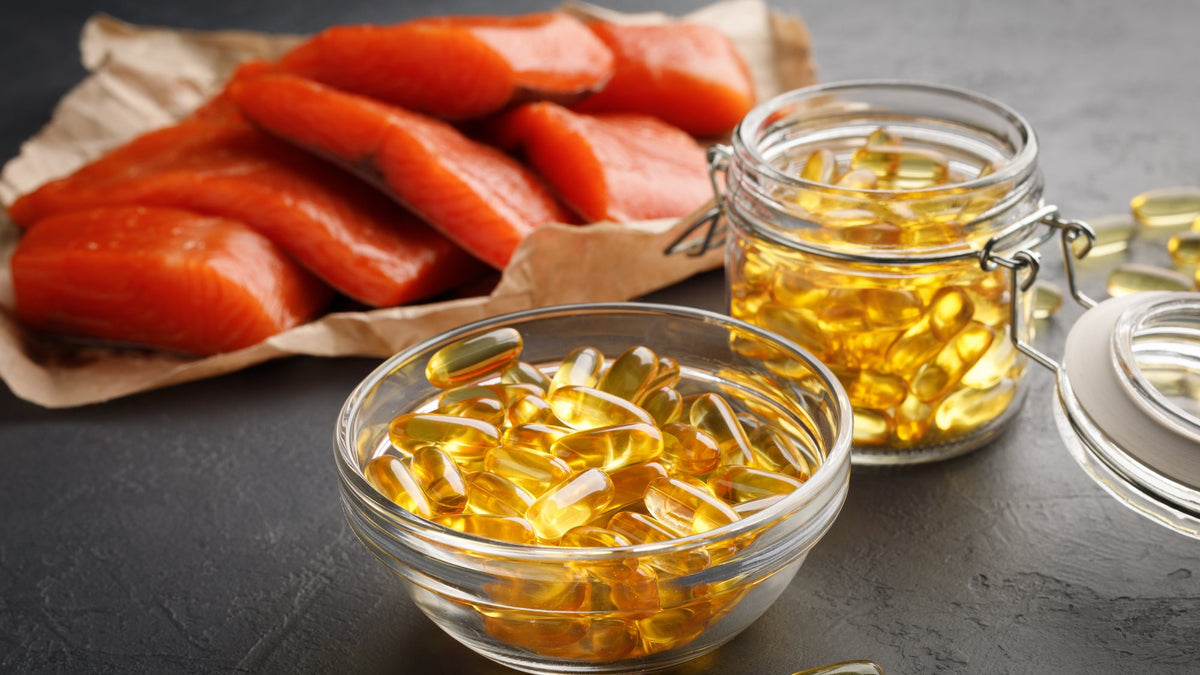
Foods high in CoQ10 are mostly animal foods: beef, organ meats, oily fish such as herring and trout, and chicken, with smaller amounts in soybean and canola oil, peanuts, sesame seeds, pistachios and a few vegetables. Even so, the amounts are small. A 3-ounce serving of beef, one of the richest everyday sources, provides about 2.6 mg, and the average diet supplies roughly 3 to 6 mg of CoQ10 a day. Your body also makes its own CoQ10, which is where most of it comes from. Here is what each food provides, and how food compares with a supplement.
Key takeaways
- The richest everyday sources of CoQ10 are meat, oily fish and chicken, followed by certain oils, nuts and seeds.
- The average diet supplies roughly 3 to 6 mg of CoQ10 a day.
- Your body makes most of its own CoQ10; food contributes about a quarter of the CoQ10 in your blood.
- Eat CoQ10 foods with a meal that includes some fat, and take a supplement as its label directs.
What is CoQ10, and why does food matter?
Coenzyme Q10 is a compound found in nearly every cell. It works inside mitochondria, the parts of your cells that turn food into usable energy, and it is also part of cell membranes. The body makes CoQ10 in most tissues, which is why it is not classed as a vitamin. Food adds to that supply. According to the Linus Pauling Institute, your body makes most of its own CoQ10; food contributes about a quarter of the CoQ10 in your blood.
Food contains both forms of CoQ10, ubiquinone and ubiquinol, and the body converts back and forth between them as it uses CoQ10 in energy production. That means the form in a given food matters less than the overall amount. If you want to understand the two forms on a supplement label, our guide to ubiquinone vs. ubiquinol explains them side by side.
So food matters, but it is one source among several. If you want the deeper science on how CoQ10 fits into energy production, our explainer on CoQ10 and what mitochondria actually do covers it.
Which foods are high in CoQ10?
The richest everyday sources of CoQ10 are meat, oily fish and chicken, followed by certain oils, nuts and seeds. These figures come from the Linus Pauling Institute at Oregon State University:
| Food | Serving | CoQ10 |
|---|---|---|
| Beef, fried | 3 ounces | 2.6 mg |
| Herring, marinated | 3 ounces | 2.3 mg |
| Chicken, fried | 3 ounces | 1.4 mg |
| Soybean oil | 1 tablespoon | 1.3 mg |
| Canola oil | 1 tablespoon | 1.0 mg |
| Rainbow trout, steamed | 3 ounces | 0.9 mg |
| Peanuts, roasted | 1 ounce | 0.8 mg |
| Sesame seeds, roasted | 1 ounce | 0.7 mg |
| Pistachios, roasted | 1 ounce | 0.6 mg |
| Broccoli, boiled | 1/2 cup | 0.5 mg |
| Cauliflower, boiled | 1/2 cup | 0.4 mg |
| Orange | 1 medium | 0.3 mg |
| Strawberries | 1/2 cup | 0.1 mg |
| Egg, boiled | 1 medium | 0.1 mg |
Organ meats such as heart and liver are often listed as the very richest sources, because the heart is one of the most energy-hungry organs in the body. They are not everyday foods for most people, which is why the list above sticks to common choices.
Plant-based sources of CoQ10
If you eat little or no meat, the best plant options are soybean and canola oil, peanuts, sesame seeds and pistachios, plus smaller amounts in broccoli, cauliflower and oranges. A plant-based day can still include some CoQ10, just in smaller amounts than a diet that includes meat and fish.
How much CoQ10 do you get from food?
The average diet supplies roughly 3 to 6 mg of CoQ10 a day. To put that in context, you would need to eat several servings of beef or oily fish to reach 10 mg in one day. There is no official daily recommendation for CoQ10, because the body makes its own and no intake level has been set as a requirement.
Cooking matters a little too. Frying and boiling can reduce the CoQ10 in some foods, so the numbers above are best read as rough guides, not exact targets.
How to get more CoQ10 from your plate
- Pair it with fat. CoQ10 is fat-soluble, so it is best absorbed with a meal that contains some fat. Fish, meat, nuts and oils already bring their own.
- Rotate oily fish into the week. Herring and trout are both on the list, and they bring other nutrients with them.
- Snack on nuts and seeds. A handful of peanuts or pistachios adds a little CoQ10 alongside protein and fiber.
- Keep vegetables on the plate. Broccoli and cauliflower add small amounts, and a varied plate supports energy in many other ways.
Food or a CoQ10 supplement: how do they compare?
Food is the foundation, and nothing replaces a varied diet. But the amounts in food are small compared with what many people choose to take as a supplement. Human studies of CoQ10 commonly use doses in the range of 100 to 300 mg a day, far beyond what a normal diet can supply.
If you decide to add one, look for a label that names the form and states the full amount. CoQ10+ provides 200 mg of Coenzyme Q10 as ubiquinone in one capsule, taken once a day 20 to 30 minutes before a meal, so the capsule meets your food. CoQ10+ supports cellular energy production and everyday energy.* Every batch is third-party tested for purity and potency, and it is made in an NSF-certified, GMP-certified, FDA-registered U.S. facility; see our standards. For a full checklist, read our guide on how to choose a CoQ10 supplement.
One safety note: CoQ10 supplements may make the blood thinner warfarin less effective. If you take warfarin or any medication, talk with your healthcare provider before adding CoQ10.
Frequently asked questions about foods high in CoQ10
What food has the most CoQ10?
Among everyday foods, beef, oily fish such as herring, and chicken lead the list. Organ meats like heart and liver are higher still, but most people eat them rarely.
Can vegetarians and vegans get CoQ10 from food?
Yes, in smaller amounts. Soybean and canola oil, peanuts, sesame seeds, pistachios, broccoli and cauliflower all contain some. The body also makes its own CoQ10 regardless of diet.
Does cooking destroy CoQ10?
Some is lost with frying and boiling, but not all of it. Gentle cooking and eating a mix of foods is a sensible approach.
Is CoQ10 from food better than from a supplement?
Both are the same compound. Food brings it along with many other nutrients, which is valuable. A supplement provides a far larger, measured amount in one capsule.
Should I eat CoQ10 foods with my supplement?
Taking a CoQ10 supplement close to a meal that includes some fat helps absorption. It does not need to be a CoQ10-rich meal, just a regular one.
Related reading from our Wellness Hub
- What Does CoQ10 Do? Mitochondria, ATP, and Cellular Energy
- How to Choose a CoQ10 Supplement: Dose, Form, and Testing
Sources
- Linus Pauling Institute, Oregon State University: Coenzyme Q10 (food sources, intake, safety)
- National Center for Complementary and Integrative Health: Coenzyme Q10
- Bhagavan HN, Chopra RK. Coenzyme Q10: absorption, tissue uptake, metabolism and pharmacokinetics. Free Radical Research, 2006
Individual results vary.
*These statements have not been evaluated by the Food and Drug Administration. This product is not intended to diagnose, treat, cure, or prevent any disease.

