
Search "inositol for hormonal balance" and you'll quickly run into two nearly identical-sounding names: myo-inositol and D-chiro-inositol. Are they the same thing? Does it matter which one, or how much of each? Understanding myo-inositol vs. D-chiro-inositol — and specifically why researchers keep coming back to a 40:1 ratio between them — clears up a lot of confusion around this increasingly popular category of women's hormonal-support supplements.
Are myo-inositol and D-chiro-inositol the same thing?
No — they're related, but distinct, forms of the same underlying compound, inositol, a vitamin-like sugar alcohol found in every cell of the body. Myo-inositol is by far the more abundant of the two forms circulating in the body and in most tissues. D-chiro-inositol is present in much smaller amounts and plays a more specialized role, particularly in how cells respond to insulin. They aren't interchangeable, and taking one doesn't automatically give you the effects of the other.
How does the body convert one form into the other?
Your body doesn't get D-chiro-inositol only from food — it also makes it from myo-inositol, using an enzyme that essentially "converts" a portion of your myo-inositol supply into the D-chiro-inositol form as needed. This conversion process is regulated by insulin signaling, which is part of why researchers who study insulin sensitivity and metabolic health have taken a close interest in the ratio between the two forms circulating in the body at any given time.
Why does the ratio matter more than the total amount?
This is the central idea behind 40:1 formulas like Myo Inositol+™: it's not just about how much total inositol you're getting, but the balance between the two forms. In blood plasma, that balance tends to sit at roughly 40 parts myo-inositol to 1 part D-chiro-inositol — and a small 2019 trial in women with polycystic ovary syndrome (PCOS), taking 4 g of inositol a day, found the 40:1 ratio restored ovulation more often than the other ratios tested in the same research (PubMed). That's a meaningfully different question than "how much inositol should I take" — it's "in what proportion."
Do myo-inositol and D-chiro-inositol actually do different things?
Emerging research suggests they do. A narrative review examining how both forms act on ovarian tissue specifically describes myo-inositol and D-chiro-inositol as playing complementary but distinct roles in the signaling pathways involved in ovarian function and hormone production, rather than simply being two versions of the same effect (PMC). Separately, a randomized controlled trial comparing the two forms directly found that myo-inositol, rather than D-chiro-inositol, was associated with improved egg quality markers in women with PCOS undergoing IVF (ICSI), at 4 g of myo-inositol a day — a useful reminder that these two molecules aren't simply interchangeable at any dose (PubMed). Research in this area is still evolving, and these are specific study contexts rather than a complete picture of how each form functions everywhere in the body.
What happens if the ratio shifts out of balance?
Some of the research that first drew attention to this ratio came from observing that certain metabolic states appear to shift the natural myo-inositol to D-chiro-inositol balance away from what's typically seen in healthy tissue — with more of the myo-inositol supply being converted into the D-chiro-inositol form than usual. That observation is part of why researchers began testing whether restoring something closer to the natural 40:1 balance, rather than simply adding more total inositol, might support healthier hormonal signaling. This remains an area of active research rather than settled science, and the mechanisms are still being worked out.
What does the follicular fluid research show about this ratio?
One frequently cited study measured the myo-inositol to D-chiro-inositol ratio directly in follicular fluid — the fluid surrounding a developing egg — and found the ratio was about 100:1 in 20 healthy women but about 0.2:1 in 20 women with PCOS who had high insulin levels (PubMed). This is one of the more direct pieces of evidence connecting insulin signaling, the myo-to-D-chiro ratio, and the local environment around egg development — and it's part of why researchers have focused on restoring the ratio specifically, rather than treating myo-inositol and D-chiro-inositol as interchangeable or simply adding more of both.
How is the D-chiro-inositol in a supplement typically sourced?
D-chiro-inositol is naturally present in relatively few food sources in meaningful amounts — carob is one of the better-known ones, and it's a common source for branded D-chiro-inositol ingredients used in supplements. Because D-chiro-inositol is needed in a much smaller amount than myo-inositol to hit a 40:1 balance, precise sourcing and labeling matter: a formula needs to disclose the exact milligram amount of a specific, named D-chiro-inositol source, rather than an estimate, for the ratio on the label to mean anything reliable.
Why do so many inositol supplements skip the ratio entirely?
Some inositol products list only a single "inositol" amount, or a proprietary blend, without disclosing how much of each form is actually included — which makes it impossible to know whether you're getting anything close to a 40:1 balance, or a very different one. Given that the ratio itself appears to matter as much as the total amount, a label that doesn't separate the two forms doesn't give you enough information to know what you're actually taking.
Is more D-chiro-inositol always better?
Not based on the current research — this is a common misconception. Because D-chiro-inositol plays a more concentrated, specialized role, taking disproportionately more of it relative to myo-inositol doesn't appear to replicate or improve on the 40:1 balance's associated outcomes in the research above; in some study contexts, higher D-chiro-inositol amounts relative to myo-inositol have actually performed worse than the 40:1 ratio. This is precisely why the ratio, not just the presence of both ingredients, is the detail worth paying attention to on a label.
Who should talk to a doctor before taking an inositol supplement?
Inositol supplements are generally well tolerated, but because both forms can affect how your body responds to insulin, anyone currently taking medication for a hormonal or metabolic condition, or managing a diagnosed condition, should talk with their doctor before starting one. Pregnant or nursing mothers, children under 18, and anyone with a known medical condition should also consult a physician first, as with any dietary supplement. This article is educational and does not diagnose, treat, or offer guidance for any specific medical condition, including PCOS.
Frequently asked questions
Should I just take a myo-inositol-only supplement instead?
Myo-inositol-only products exist and are studied on their own, but if you're specifically interested in the research behind the 40:1 ratio, a formula that discloses both forms separately is the only way to know you're actually getting that balance.
Is a higher total dose of inositol better than the right ratio?
Based on the research discussed above, the ratio between the two forms appears to matter distinctly from the total amount — simply taking more inositol doesn't automatically replicate the 40:1 balance if the product doesn't disclose both forms.
How is D-chiro-inositol different from myo-inositol at the molecular level?
They're stereoisomers of the same base compound — same molecular formula, different three-dimensional arrangement — which is part of why they behave differently in the body despite being closely related.
Does age affect how my body handles this ratio?
The research connecting inositol ratios to hormonal and metabolic health spans a range of ages, and general shifts in hormonal balance and metabolism that come with age are part of why this category of supplement has grown in popularity.
Can I get enough of both forms from food alone?
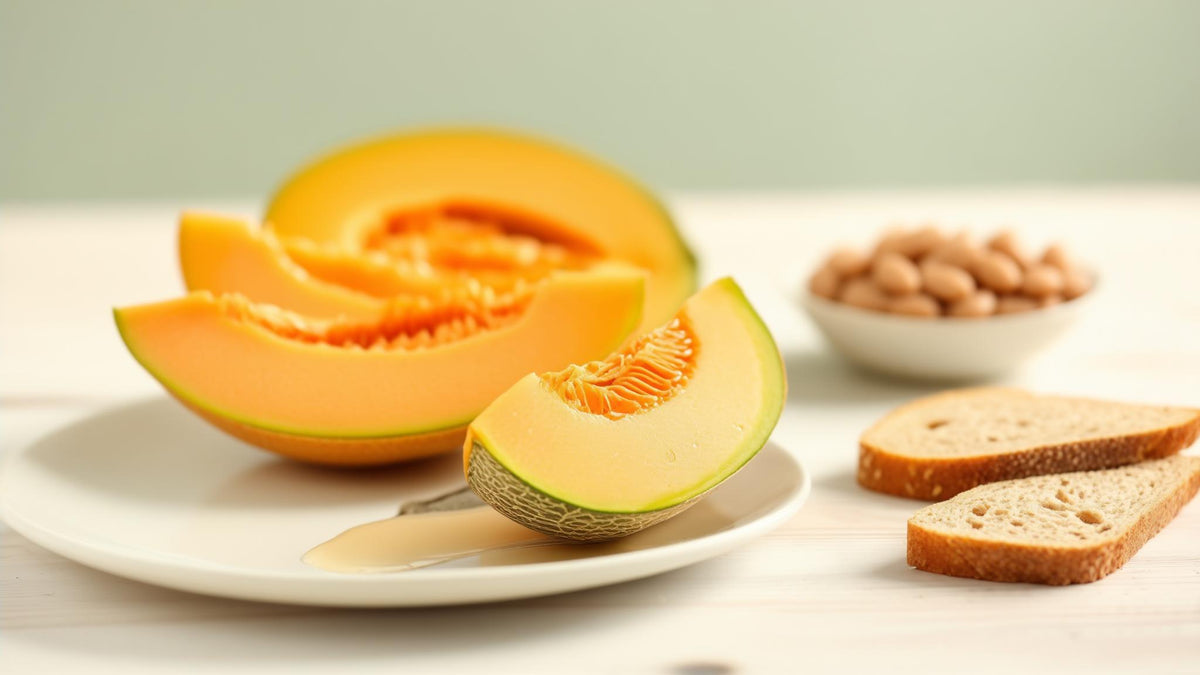
Inositol is present in foods like citrus fruits, beans, and whole grains, but food sources don't provide a controlled, disclosed 40:1 ratio — which is the specific detail this research focuses on.
Where this leaves you
The takeaway from this research isn't "more inositol is better" — it's that the balance between myo-inositol and D-chiro-inositol appears to matter in its own right, and a label that discloses both amounts separately is the only way to know what you're actually taking. If you want to see how a supplement built specifically around the 40:1 ratio is formulated, our Myo Inositol+ guide covers the full label and research in more detail.
Related reading: Our Standards: how every batch is third-party tested · Myo Inositol+
Sources
- The 40:1 Myo-Inositol/D-Chiro-Inositol Plasma Ratio Is Able to Restore Ovulation: Comparison with Other Ratios — PubMed
- Myo-Inositol and D-Chiro-Inositol as Modulators of Ovary Steroidogenesis: A Narrative Review — PMC
- Myo-Inositol Rather Than D-Chiro-Inositol Is Able to Improve Oocyte Quality in ICSI Cycles: A Prospective, Controlled, Randomized Trial — PubMed
- Hyperinsulinemia Alters Myo-Inositol to D-Chiro-Inositol Ratio in the Follicular Fluid of Patients with PCOS — PubMed
Individual results vary.
These statements have not been evaluated by the Food and Drug Administration. This product is not intended to diagnose, treat, cure, or prevent any disease.

