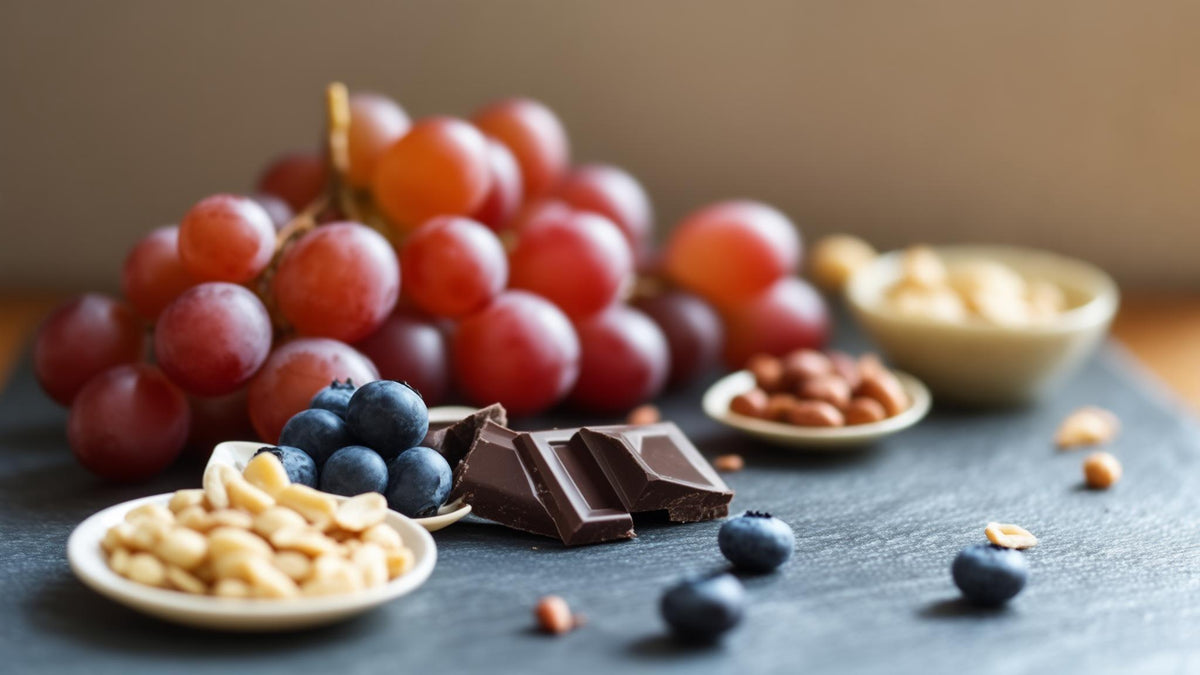
Resveratrol gets called "the longevity molecule" often enough that it's easy to assume the science is settled. It isn't — but that doesn't mean there's nothing there. If you want the real resveratrol benefits picture, separated from the supplement-industry marketing, here's what antioxidants actually do and where resveratrol fits.

What are antioxidants, actually?
Your body constantly produces molecules called free radicals as a normal byproduct of metabolism, and external factors — pollution, UV exposure, smoking, and others — add more. Free radicals aren't inherently bad; your immune system even uses them deliberately at times. But when free radicals outpace your body's ability to neutralize them, a state called oxidative stress, it's linked to cellular damage over time. Antioxidants are compounds that help neutralize excess free radicals, which is the basic mechanism behind why they're studied for healthy aging generally.
This is a genuinely useful, well-established area of biology — it's the "why" behind decades of public health advice to eat colorful fruits and vegetables. Where things get murkier is the leap from "antioxidants matter" to "this specific supplement, at this specific dose, will meaningfully change your health outcomes," which is a much bigger claim requiring its own dedicated research for each ingredient.
Where does resveratrol fit among antioxidants?
Resveratrol is a polyphenol antioxidant, part of a broad plant-compound family that also includes things like flavonoids and catechins (found in green tea). What sets resveratrol apart in research circles isn't necessarily that it's the "strongest" antioxidant — there's no single agreed-upon way to rank antioxidants against each other — but that it's been studied specifically in relation to cardiovascular markers and cellular aging pathways in a way that's generated a large, still-growing body of research.
How did resveratrol get its "longevity molecule" reputation?
The story traces back to two threads. First, early lab and animal research explored resveratrol's effects on proteins called sirtuins, which are involved in cellular stress response and have been linked to lifespan in some animal models — this generated significant scientific and media interest. Second, resveratrol's association with red wine and the so-called "French Paradox" (the observation that French populations had relatively low rates of heart disease despite diets higher in saturated fat) gave it a catchy public narrative. Both threads are genuinely interesting starting points for research — but starting points are not the same as proven human outcomes, and a lot of resveratrol's popular reputation has outpaced what's actually been confirmed in people. Supplement marketing has had two decades to run with the "longevity molecule" framing, and it's stuck around far more successfully than the underlying science has kept pace with, which is exactly the gap this article is trying to close.
What does current human research support?
Setting the more dramatic claims aside, here's what a reasonable, evidence-based summary looks like: resveratrol has a growing body of human research on cardiovascular markers specifically. A systematic review and meta-analysis of randomized controlled trials found resveratrol supplementation associated with improved endothelial health — a measure of how well blood vessels function (PubMed). A separate systematic review and meta-regression examining resveratrol's anti-inflammatory effects in coronary artery disease found supportive evidence across the trials studied (PubMed). That's a real, evidence-backed picture — narrower than "reverses aging," but genuinely supported by research.
Why is resveratrol's absorption such a common topic?
One of the more consistent findings across resveratrol research is that it's poorly absorbed and rapidly metabolized by the body — a genuine limitation that researchers have spent considerable effort trying to work around, including studying different extraction methods and formulations. This is worth knowing as a consumer: taking resveratrol consistently, with food, matters more than it might for a nutrient your body absorbs more efficiently.
Does resveratrol help with skin and beauty, too?
You'll see resveratrol in skincare products as well as supplements, usually framed around its antioxidant properties potentially helping protect skin from oxidative stress caused by UV exposure and pollution. Topical and oral resveratrol are different delivery methods studied somewhat separately, and a supplement isn't a substitute for sunscreen or an established skincare routine — it's more reasonably framed as one small piece of a broader approach to skin health, not a standalone anti-aging skin treatment.
What's the difference between resveratrol supplements sourced from grapes vs. Japanese knotweed?
Most resveratrol supplements today use Japanese knotweed root as the source rather than grape skins, simply because knotweed naturally contains a much higher concentration of resveratrol — it takes far less raw plant material to reach a meaningful dose. The resveratrol molecule itself is chemically identical regardless of source; what differs is extraction efficiency and, sometimes, the standardization method used to verify trans-resveratrol content.
A few practical takeaways
- Resveratrol's human research is real but narrower than its popular "reverses aging" reputation — the strongest evidence is around cardiovascular markers.
- Poor absorption is a genuine, well-documented limitation — consistency and taking it with food matter.
- Animal and cellular research generated the initial excitement; human outcomes research is still catching up.
- A varied, antioxidant-rich diet remains a reasonable foundation, with a supplement as an addition rather than a replacement.
- Check with your doctor before starting if you're on blood thinners or medications metabolized by the liver.
How does resveratrol compare to other well-known antioxidants?
Vitamin C, vitamin E, and CoQ10 are other commonly discussed antioxidants, each with their own research base and mechanism. None of them are directly interchangeable with resveratrol — they work through different pathways and have been studied for different specific outcomes. A varied diet rich in colorful fruits and vegetables provides a broad mix of antioxidant compounds, which is generally considered a better foundational approach than relying on any single antioxidant supplement to cover everything.
Frequently asked questions
Does resveratrol actually extend lifespan in humans?
This hasn't been demonstrated in human research. The lifespan-extension findings that generated so much initial excitement came from animal and cellular research, and translating that directly to human longevity claims isn't something current evidence supports.
Is a resveratrol supplement better than just eating antioxidant-rich foods?
They're not mutually exclusive, and neither fully replaces the other. Whole foods provide a broad mix of antioxidants, fiber, and other nutrients working together, while a standardized supplement offers a specific, consistent, measurable amount of one compound. Many people reasonably do both.
Why do some resveratrol supplements list such different dosages?
Formulations vary widely, and some products list total plant-extract weight rather than pure trans-resveratrol content, which can make direct comparisons between products misleading. Reading exactly how a label describes its ingredient — extract weight vs. standardized percentage — matters more than the raw number on the front of the bottle.
Is resveratrol safe to take daily long-term?
Current research generally supports resveratrol's safety at studied doses, though anyone on blood thinners, with a bleeding disorder, or taking medications metabolized by the liver should talk with their doctor first, given resveratrol's potential interactions in those areas.
Does the "French Paradox" actually prove resveratrol works?
Not on its own. The French Paradox is an epidemiological observation — a pattern noticed across populations — not a controlled experiment isolating resveratrol as the cause. Diet, lifestyle, portion sizes, and other factors likely all played a role, which is exactly why researchers moved on to studying resveratrol directly in controlled trials rather than relying on the wine-drinking population comparison alone.
Should I choose resveratrol or NMN if I can only pick one?
They work through different mechanisms, so "better" depends on what you're prioritizing — antioxidant and cardiovascular support versus the NAD+ energy pathway. Neither is a replacement for foundational habits like diet, sleep, and movement, and there's no rule requiring you to pick only one.
Where this leaves you
Resveratrol is a legitimately interesting, well-studied antioxidant with real, if narrower-than-marketed, human research behind it — particularly around cardiovascular markers. It's not a proven longevity treatment, and any product claiming otherwise is overstating the science. If you're looking for a resveratrol supplement that describes itself accurately, our Resveratrol+ guide covers the label details.
Sources
- Resveratrol supplementation efficiently improves endothelial health: A systematic review and meta-analysis of randomized controlled trials — PubMed
- Resveratrol as an Anti-inflammatory Agent in Coronary Artery Disease: A Systematic Review, Meta-Analysis and Meta-Regression — PubMed
- The Nutrition Source, Harvard T.H. Chan School of Public Health
Individual results vary.
These statements have not been evaluated by the Food and Drug Administration. This product is not intended to diagnose, treat, cure, or prevent any disease.