
Biotin vs collagen is not a contest between two versions of the same thing. Biotin is vitamin B7, a coenzyme your cells use to process fats, carbohydrates and protein. Collagen is a structural protein, the framework that gives skin and connective tissue their strength. Adults need only about 30 mcg of biotin a day, the Adequate Intake listed by the NIH Office of Dietary Supplements, while collagen supplements are measured in grams. They do different jobs, so one cannot stand in for the other.
Key takeaways
- Biotin is a B vitamin that works as a helper for enzymes; collagen is a protein that is part of the tissue itself.
- Biotin deficiency is uncommon, and research on extra biotin for hair and nails mostly involves people who were low or had a specific nail or hair condition.
- Collagen peptide studies have looked mainly at skin hydration and elasticity, and a smaller number at nails.
- High-dose biotin can interfere with some laboratory tests, so tell your clinician and the lab before any blood work.
- Beauty Within+™ is a biotin-based vitamin and mineral formula, while Collagen Complex+ is a multi-source collagen formula, so they cover different ground.
Biotin vs collagen: the short comparison
Biotin and collagen both appear on beauty labels, but they are different things: biotin is a B vitamin, and collagen is a structural protein. The table below puts the main differences side by side.
| Question | Biotin | Collagen |
|---|---|---|
| What it is | Vitamin B7, a water-soluble vitamin | A family of structural proteins (types I, II, III and others) |
| Main job in the body | Helps enzymes that process fats, carbohydrates and protein | Gives skin, tendons, bone and cartilage their structure |
| How much adults need | Adequate Intake of 30 mcg a day (NIH ODS) | No daily requirement; the body makes its own from dietary protein |
| Typical supplement amount | Micrograms, often thousands of mcg | Grams of collagen peptides |
| Food sources | Eggs, meat, fish, seeds, nuts, some vegetables | Animal connective tissue, bone broth, gelatin |
| What research has studied | Mostly people who were low or had a specific hair or nail condition | Mainly skin hydration and elasticity; a few nail studies |
| Key caution | Can interfere with some lab tests | Animal sources can carry fish or egg allergens |
What is biotin, and what does it do for hair and nails?
Biotin is vitamin B7. Inside your cells it acts as a coenzyme, a helper that lets certain enzymes break down fats, carbohydrates and amino acids for energy and building material. Hair and nails are made largely of keratin, a protein, so biotin's role in protein metabolism is the reason it shows up in so many hair, skin and nail formulas.
The NIH Office of Dietary Supplements lists an Adequate Intake of 30 mcg a day for adults and notes that true deficiency is uncommon in people who eat a varied diet. Thinning hair and brittle nails are among the signs of deficiency, which is where biotin's reputation started.
Biotin deficiency is uncommon, and research on extra biotin for hair and nails mostly involves people who were low or had a specific nail or hair condition. A 2017 review in Skin Appendage Disorders found that the published cases of benefit came from people with an underlying deficiency or a specific condition, and the authors found no strong evidence for people who were not low to begin with. Biotin works best seen as one part of the whole nutrient picture.
The lab-test caveat
High-dose biotin can interfere with some laboratory tests, so tell your clinician and the lab before any blood work. The NIH notes that very high biotin intakes can skew tests that use biotin-streptavidin technology, such as some thyroid hormone tests, and the FDA lists heart (troponin) tests that are affected. More in Does Biotin Affect Blood Tests? What to Know Before Bloodwork
What is collagen, and how do collagen supplements work?
Collagen is the most abundant protein in the body, according to Harvard's Nutrition Source. It forms the fibers that give skin its firmness and tendons their strength. Type I collagen dominates skin, tendon and bone; type II is the main collagen of cartilage; type III sits alongside type I in skin and blood vessels. Our explainer Type I & III Collagen, Explained: What to Look For on the Label goes deeper on the types.
Your body builds collagen from amino acids, with vitamin C as a required helper. Supplements usually supply hydrolyzed collagen, also called collagen peptides: collagen broken into short chains that are easier to digest. You digest them into peptides and amino acids, which join the pool your body draws on.
Collagen peptide studies have looked mainly at skin hydration and elasticity, and a smaller number at nails. A 2021 meta-analysis of 19 randomized, placebo-controlled trials (1,125 participants aged 20 to 70, 95% of them women) reported better skin hydration and elasticity with hydrolyzed collagen than with placebo, with most trials running around 90 days. A small 2017 open-label study of 25 people with brittle nails, who took 2.5 g a day of one branded collagen peptide product, reported a 12% faster nail growth rate and a 42% drop in how often nails broke after 24 weeks. Each study used its own peptide product and amount, so these results describe those study products, not any one capsule on a shelf. Harvard's Nutrition Source adds that most, if not all, research on collagen supplements is funded or partly funded by related industries, or has authors with ties to them, which makes it hard to judge how well these supplements work.
Biotin or collagen: which fits your goal?
The useful question is what you are trying to support.
- If your diet is narrow or you want broad nutrient coverage, a vitamin and mineral formula built around biotin, zinc, iron and vitamin C covers the cofactors your body uses to make keratin and collagen.
- If your interest is skin firmness or connective tissue, collagen peptides are the ingredient tested in the skin trials described above.
- If you want both, the two can sit in one routine because they do not duplicate each other.
- If you avoid animal products or have a fish or egg allergy, read the source line on any collagen label carefully, since most collagen comes from animals.
Whatever you choose, protein, vitamin C, zinc and iron from food remain the foundation. Our guide Nutrients for Hair, Skin and Nails: What Each One Does walks through each one.
How our two formulas line up
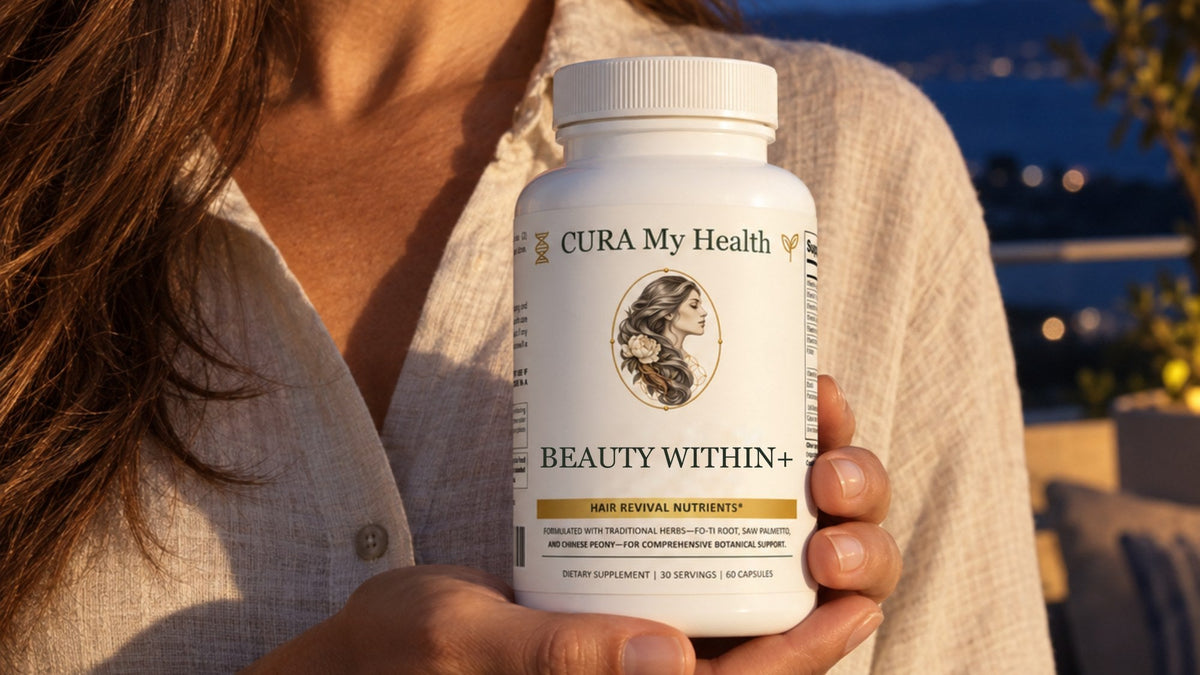
Beauty Within+ is a biotin-based vitamin and mineral formula, while Collagen Complex+ is a multi-source collagen formula, so they cover different ground.
Beauty Within+: the biotin side
Beauty Within+ combines biotin with vitamins, minerals, and a botanical blend that includes horsetail rather than presenting biotin as a stand-alone answer. Each 2-capsule serving provides 5,000 mcg of biotin alongside vitamin C, zinc, iron, vitamin D and B vitamins, plus a 359 mg botanical blend. Blend totals are on the label; the amounts inside each blend are not. The label directs adults to take two capsules daily and not to exceed the recommended dose. It is formulated to support healthier hair and improved elasticity of hair, as a nail strengthening formula, and to nourish skin.*
Allergens and warnings: The formula contains iron and soy, and its botanical blend includes barley grass, which contains gluten. Its vitamin D3 comes from lanolin and its vitamin A beadlets are of animal origin, so it is not suitable for a plant-based diet. The label's caution: Women who are pregnant or lactating and anyone taking medications should consult a health care professional before using any nutritional product. If any adverse reactions occur, discontinue use and consult a health care professional. The label also says: Keep out of reach of children. Do not use if safety seal is damaged or missing. Store in a cool, dry place. IRON WARNING: Accidental overdose of iron-containing products is a leading cause of fatal poisoning in children under six (6). In case of accidental overdose, call a doctor or poison control center immediately. High-dose biotin can also interfere with some laboratory tests; share the full label with your clinician and laboratory team.
Medicines and health conditions: The NIH Office of Dietary Supplements notes that biotin can interact with certain medications, and that people who regularly take anticonvulsants such as carbamazepine, primidone, phenytoin or phenobarbital should discuss their biotin status with their health care providers. Its fact sheets also note that vitamin C supplements may interact with radiation therapy and medicines including chemotherapy drugs and statins; that iron supplements can make levodopa and levothyroxine less effective, and proton pump inhibitors such as lansoprazole and omeprazole might reduce the iron the body absorbs from food; that zinc supplements can interact with quinolone and tetracycline antibiotics and with penicillamine, and thiazide diuretics increase the zinc lost in urine; and that folate supplements could interfere with methotrexate, folate and antiseizure medicines such as phenytoin, carbamazepine and valproate can lower each other's blood levels, and sulfasalazine can reduce folate absorption. Its vitamin D, vitamin B6 and magnesium fact sheets add that orlistat can reduce the vitamin D the body absorbs, statins might not work as well with high-dose vitamin D supplements, steroids such as prednisone can lower blood levels of vitamin D, and thiazide diuretics could raise blood calcium too high with vitamin D supplements; that vitamin B6 supplements might interact with cycloserine, an antibiotic for tuberculosis, and worsen the seizures and nerve damage it might cause, certain epilepsy drugs could lower vitamin B6 levels and reduce the drugs' ability to control seizures, and theophylline can lower vitamin B6 levels and cause seizures; and that bisphosphonates and antibiotics may not be absorbed well when taken too soon before or after a supplement with magnesium, diuretics can raise or lower the magnesium lost in urine, and prescription drugs for acid reflux or peptic ulcers can cause low blood magnesium when taken over a long period. ODS also says people with hereditary hemochromatosis should avoid iron and vitamin C supplements, and that large amounts of folate supplements might hide a vitamin B12 deficiency. Its folate sheet also advises caution with high doses of folic acid supplements (more than the 1,000 mcg upper limit), especially for people with a history of colorectal adenomas. If any of these apply to you, talk with your health care provider before using Beauty Within+.
Add it up: One serving of Beauty Within+ gives 14.5 mg of iron, 7 mg of zinc, 120 mg of vitamin C, 880 mcg of folic acid, 20 mcg of vitamin D, 8 mg of vitamin B6 and 120 mg of magnesium. The NIH Office of Dietary Supplements lists adult upper limits of 45 mg of iron and 40 mg of zinc a day from all sources, including food, 2,000 mg of vitamin C a day, 1,000 mcg of folic acid a day from supplements and fortified foods, 100 mcg (4,000 IU) of vitamin D and 100 mg of vitamin B6 a day from all sources, and 350 mg of magnesium a day from supplements and medicines only (magnesium in food does not count). ODS adds that in 2023 the European Food Safety Authority set a lower adult limit of 12 mg of vitamin B6 a day. Count your food, any multivitamin and any other supplements toward those totals.
Collagen Complex+: the collagen side
Collagen Complex+ provides a 1,800 mg collagen blend in each 3-capsule serving, drawn from five sources (bovine, hydrolyzed chicken, marine, eggshell membrane and avian sternum) for types I, II, III, V and X. As with Beauty Within+, blend totals are on the label; the amounts inside each blend are not. The label directs adults to take one to two servings a day, or as directed by a healthcare professional. It supports healthy skin, hair and nails, promotes joint comfort and flexibility, and helps maintain strong bones and connective tissues.* It contains fish (cod) and egg and comes in gelatin capsules, so it is not suitable for anyone with those allergies or following a vegetarian diet. The label's caution: Do not exceed recommended dose. Pregnant or nursing mothers, children under the age of 18, and individuals with a known medical condition should consult a physician before using this or any dietary supplement. The label also says: Keep out of reach of children. Do not use if safety seal is damaged or missing. Store in a cool, dry place.
For comparison with the brittle-nail study described earlier, which used 2.5 g a day of one branded collagen peptide product: one serving of Collagen Complex+ gives 1,800 mg of a different, five-source collagen blend, less than the study amount, and two servings give 3,600 mg, more than the study amount.
Both are third-party tested, every batch, for purity and potency, and manufactured in USA with globally sourced materials in an NSF-certified, GMP-certified, FDA-registered facility. See our standards for how that testing works.
Frequently asked questions about biotin vs collagen
Is biotin or collagen better for hair?
They support hair in different ways. Biotin is a vitamin your body uses in protein metabolism, and research shows the clearest benefit in people who are low in it. Collagen is a protein source, and most collagen research has focused on skin rather than hair. A balanced diet with enough protein, iron and zinc matters for hair either way.
Can I take biotin and collagen together?
Yes, for most adults they can share a routine because one is a vitamin and the other is a protein. Read every label in your routine so you do not double up on biotin, iron or other nutrients from a third product, and add up what you get from food and every supplement. The NIH Office of Dietary Supplements lists adult upper limits of 45 mg of iron and 40 mg of zinc a day from all sources, 2,000 mg of vitamin C a day, 1,000 mcg of folic acid a day from supplements and fortified foods, 100 mcg (4,000 IU) of vitamin D and 100 mg of vitamin B6 a day from all sources, and 350 mg of magnesium a day from supplements and medicines only (magnesium in food does not count). ODS adds that in 2023 the European Food Safety Authority set a lower adult limit of 12 mg of vitamin B6 a day. If you are pregnant, nursing, taking medication or managing a health condition, check with your healthcare professional first.
Does collagen contain biotin?
Plain collagen does not; it is a protein made of amino acids such as glycine, proline and hydroxyproline. Some collagen products add biotin or other vitamins, so check the Supplement Facts panel to see what a specific product contains.
How much biotin do adults need?
The NIH Office of Dietary Supplements lists an Adequate Intake of 30 mcg a day for adults, and most people get that from food. Hair, skin and nail formulas often contain far more. If you take one, mention it to your clinician before any lab work because high amounts can affect some test results.
Which is better for skin, biotin or collagen?
Skin research has focused far more on collagen peptides, with trials measuring hydration and elasticity. Biotin's link to skin is indirect, through its role in metabolism.
Related reading from our Wellness Hub
- Biotin for Hair, Skin & Nails: How Much Do You Actually Need?
- Do Collagen Supplements Actually Work? What the Research Says
- Marine vs. Bovine Collagen: What Is the Difference?
Sources
- NIH Office of Dietary Supplements: Biotin, Fact Sheet for Health Professionals, updated January 10, 2022
- Patel DP, et al. A Review of the Use of Biotin for Hair Loss. Skin Appendage Disord. 2017
- FDA: Biotin Interference with Troponin Lab Tests, content current as of June 21, 2022
- Harvard T.H. Chan School of Public Health, The Nutrition Source: Collagen, last reviewed May 2021
- de Miranda RB, et al. Effects of hydrolyzed collagen supplementation on skin aging: a systematic review and meta-analysis. Int J Dermatol. 2021
- Hexsel D, et al. Oral supplementation with specific bioactive collagen peptides improves nail growth and reduces symptoms of brittle nails. J Cosmet Dermatol. 2017
- NIH Office of Dietary Supplements: Vitamin C, Fact Sheet for Health Professionals, updated July 31, 2025
- NIH Office of Dietary Supplements: Iron, Fact Sheet for Consumers, updated August 17, 2023
- NIH Office of Dietary Supplements: Zinc, Fact Sheet for Consumers, updated October 4, 2022
- NIH Office of Dietary Supplements: Folate, Fact Sheet for Consumers, updated November 1, 2022
- NIH Office of Dietary Supplements: Vitamin D, Fact Sheet for Consumers, updated November 8, 2022
- NIH Office of Dietary Supplements: Vitamin B6, Fact Sheet for Consumers, updated June 16, 2023
- NIH Office of Dietary Supplements: Magnesium, Fact Sheet for Consumers, updated March 22, 2021
Individual results vary.
*These statements have not been evaluated by the Food and Drug Administration. This product is not intended to diagnose, treat, cure, or prevent any disease.

