
Bloating is one of the most common digestive complaints we hear from people, and it is rarely about one thing. Shifting hormones, slower digestion, a lower-fiber diet, stress and a changing gut microbiome all play a part. The good news: most everyday bloating responds to simple, steady habits — eating more slowly, adding fiber gradually with plenty of water, moving after meals, and supporting your gut bacteria consistently. Here is why it shows up, what helps, and when to talk with your doctor.
One thing first: bloating that is new, persistent, or comes with pain, weight loss, or a change in bowel habits deserves a conversation with your healthcare provider. Everything below is about ordinary, occasional bloating — the tight waistband after lunch — not medical advice.
Why does bloating happen?
Bloating is a feeling of fullness or pressure in the belly, with or without visible swelling. According to the National Institute of Diabetes and Digestive and Kidney Diseases (NIDDK), gas in the digestive tract comes from two main sources: air you swallow, and the normal breakdown of certain foods by bacteria in the large intestine. Several everyday factors can make both sources more noticeable.
Hormones start to fluctuate
Perimenopause — the years leading up to menopause — brings uneven rises and falls in estrogen and progesterone. Progesterone relaxes smooth muscle, including the muscle that moves food through your gut, so digestion can slow and gas has more time to build. Estrogen swings can also affect water retention, which is why some women notice bloating that comes and goes with their cycle.
Digestion slows a little
Gut motility — the wave-like movement that pushes food along — tends to become less brisk with age. Food sits in the large intestine longer, and the bacteria there have more time to ferment it, which produces gas.
The gut microbiome changes
The community of bacteria in your gut is shaped by diet, stress, sleep, antibiotics and age. A less diverse microbiome can mean more gas-producing fermentation. For the full picture, our guide What Is the Gut Microbiome? A Plain Guide to Your Gut Bacteria is a good starting point.
Stress lands in the gut
The gut and brain talk constantly. Ongoing stress can change how quickly food moves, how sensitive your gut feels, and how much air you swallow when you eat fast at your desk.
Fiber and water may have dropped
Most American adults fall short on fiber. The Dietary Guidelines for Americans note that more than 90 percent of people do not meet the recommended intake. Too little fiber slows things down. Adding a lot of fiber all at once — without enough water — also causes bloating. The balance matters.
What foods and habits make bloating worse?
Everyone is different, but these are the usual suspects. A simple food-and-symptom note on your phone for two weeks is the fastest way to find your pattern.
- Eating fast and talking while you eat. Both add swallowed air.
- Carbonated drinks. Sparkling water, soda and beer put gas straight into the stomach.
- Sugar alcohols. Sorbitol, mannitol and xylitol in sugar-free gum, mints and "diet" snacks are poorly absorbed and ferment in the gut.
- Large portions of beans, lentils, onions, cabbage and broccoli. Healthy foods, but rich in fermentable fibers. Smaller, regular portions are usually tolerated better than a big serving now and then.
- Dairy. The ability to digest lactose can decline with age. If milk or ice cream reliably leaves you bloated, notice it.
- Very large or very late meals, then sitting still. A heavy dinner close to bedtime sits longer; movement helps gas move through.
What actually helps with bloating?
None of these are dramatic. Together they are what makes the difference.
| Habit | Why it helps |
|---|---|
| Slow down at meals | Less swallowed air; better chewing means less work for the gut. |
| Add fiber gradually, with water | Supports regularity without the gas that comes from a sudden jump. NIDDK suggests increasing fiber slowly. |
| Walk 10–15 minutes after eating | Gentle movement supports gut motility. |
| Swap fizzy drinks for still water or warm tea | Removes a direct source of gas. Ginger or peppermint tea is a comforting choice. |
| Manage stress on purpose | A calmer nervous system supports a calmer gut. |
| Support your gut bacteria daily | Fermented foods and a well-made probiotic help replenish healthy bacteria.* |
Can a probiotic help with bloating?
A probiotic will not fix a fizzy-drink habit or a fiber gap. What it can do is help replenish healthy bacteria and support digestive health day to day.* The NIH Office of Dietary Supplements notes that probiotics are live microorganisms that may support health when consumed in adequate amounts, and that effects are strain-specific — which is why the strains on the label matter more than a big number on the front.
Our Probiotic 40+ delivers 40 billion CFU per two-capsule serving from four named strains — Lactobacillus acidophilus (La-14), Bifidobacterium lactis (Bl-04), Lactobacillus plantarum (Lp-115) and Lactobacillus paracasei (Lpc-37) — protected by MAKTREK® Bi-Pass delivery so more of the bacteria survive stomach acid, with a marine polysaccharide and a fructooligosaccharide prebiotic to feed them.* The label suggests one capsule during the day and one in the evening, and not more than two capsules a day.
Two label facts worth knowing before you order: the 40 billion CFU is a proprietary blend, so the per-strain counts are not printed; and the L-leucine in the formula is sourced from duck feathers, so it is not suitable for a vegan or vegetarian diet. If you are pregnant or nursing, or you have a known medical condition, talk with your physician before starting it or any supplement.
Give it several weeks of consistent daily use — a few days is not a fair test. We explain what to expect in How Long Do Probiotics Take to Work?
Do ginger and turmeric help with digestion?
Ginger has been used for digestive comfort for centuries, and the National Center for Complementary and Integrative Health (NCCIH) notes it has been studied for nausea and digestive support.
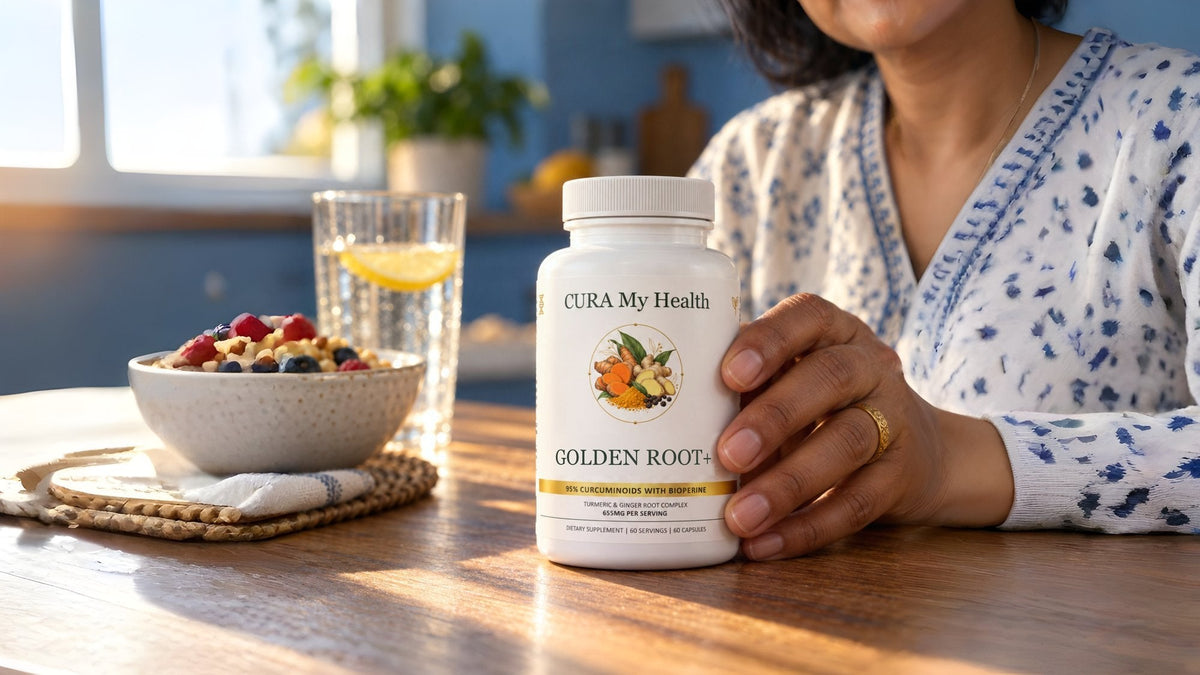
If you prefer a capsule, Golden Root+™ pairs 500 mg of turmeric root and 100 mg of ginger extract per capsule with 95% curcuminoids and BioPerine® — two roots long used to support digestion, plus joint mobility.* The label suggests one capsule twice a day, 20–30 minutes before a meal. Turmeric can interact with blood thinners and some other medications, so check with your healthcare provider first if you take any, and do not use it if you are pregnant or nursing without your doctor's OK. Our article Ginger for Digestion and Turmeric for Joint Support goes deeper on why the two are paired.
Why does quality matter more in a gut supplement?
In gut supplements, what is on the label and what is in the bottle do not always match. Live bacteria are fragile and botanicals vary in strength. That is why Golden Root+ and Probiotic 40+ are third-party tested, every batch, by an outside lab for purity and potency, and manufactured in the USA with globally sourced materials, in an NSF-certified, GMP-certified, FDA-registered facility. Golden Root+ lists every active with its own amount; where a formula uses a proprietary blend, as Probiotic 40+ does, we say so plainly on the product page. Our formulas are clean by design, formulated for adults, and covered by a 60-day guarantee. You can read exactly how we test on Our Standards.
When should you see a doctor about bloating?
Occasional bloating that eases with the habits above is normal. Make an appointment if bloating is persistent or getting worse, comes with unexplained weight loss, blood in your stool, severe or ongoing abdominal pain, vomiting, or a lasting change in bowel habits, or is new and does not go away over a few weeks. Persistent bloating is worth checking rather than living with.
A simple daily plan for less bloating
- Morning: a glass of still water, breakfast with some fiber (oats, berries, chia), and your first Probiotic 40+ capsule.
- Meals: sit down, slow down, moderate portions, no fizzy drinks.
- After lunch: a 10–15 minute walk.
- Afternoon: skip the sugar-free gum and mints.
- Evening: an earlier, lighter dinner, ginger tea if you like it, and your second Probiotic 40+ capsule.
- Two weeks in: read your note and adjust the one thing that shows up most.
Frequently asked questions about bloating
Is bloating a sign of perimenopause?
It can be one of the everyday changes women notice as hormones begin to fluctuate, alongside sleep and cycle changes. Bloating alone does not confirm perimenopause, and it has many other causes. If it is persistent, talk with your healthcare provider.
What is the fastest way to relieve bloating?
For ordinary post-meal bloating: walk for 10–15 minutes, sip warm water or ginger tea, and avoid lying down right away. Longer term, eating more slowly and cutting carbonated drinks and sugar alcohols usually make the biggest difference.
Should I eat more fiber or less if I am bloated?
Most people need more fiber, not less — but add it gradually over a few weeks with plenty of water. A sudden jump in fiber is a common cause of temporary bloating. If one high-fiber food reliably bothers you, try a smaller portion rather than cutting it out.
How long should I take a probiotic before I decide if it helps?
Several weeks of consistent daily use. Probiotic effects are gradual and strain-specific, so a few days is not a fair test.
Can I take Probiotic 40+ and Golden Root+ together?
They are sold together in our Gut Reset Bundle. Follow each label — Probiotic 40+ is one capsule during the day and one in the evening; Golden Root+ is one capsule twice a day before meals. If you take medication (especially blood thinners), are pregnant or nursing, or have a medical condition, check with your healthcare provider first.
Related reading from our Wellness Hub
- What Is the Gut Microbiome? A Plain Guide to Your Gut Bacteria
- How Long Do Probiotics Take to Work?
- Prebiotics vs. Probiotics vs. Synbiotics: A Plain-English Guide
- Ginger for Digestion and Turmeric for Joint Support: Why Pair Them?
Sources
- NIDDK — Symptoms & Causes of Gas in the Digestive Tract
- NIDDK — Eating, Diet, & Nutrition for Gas in the Digestive Tract
- NIH Office of Dietary Supplements — Probiotics Fact Sheet
- NCCIH — Probiotics: What You Need To Know
- NCCIH — Ginger
- Dietary Guidelines for Americans, 2020–2025
Individual results vary.
These statements have not been evaluated by the Food and Drug Administration. This product is not intended to diagnose, treat, cure, or prevent any disease.

