
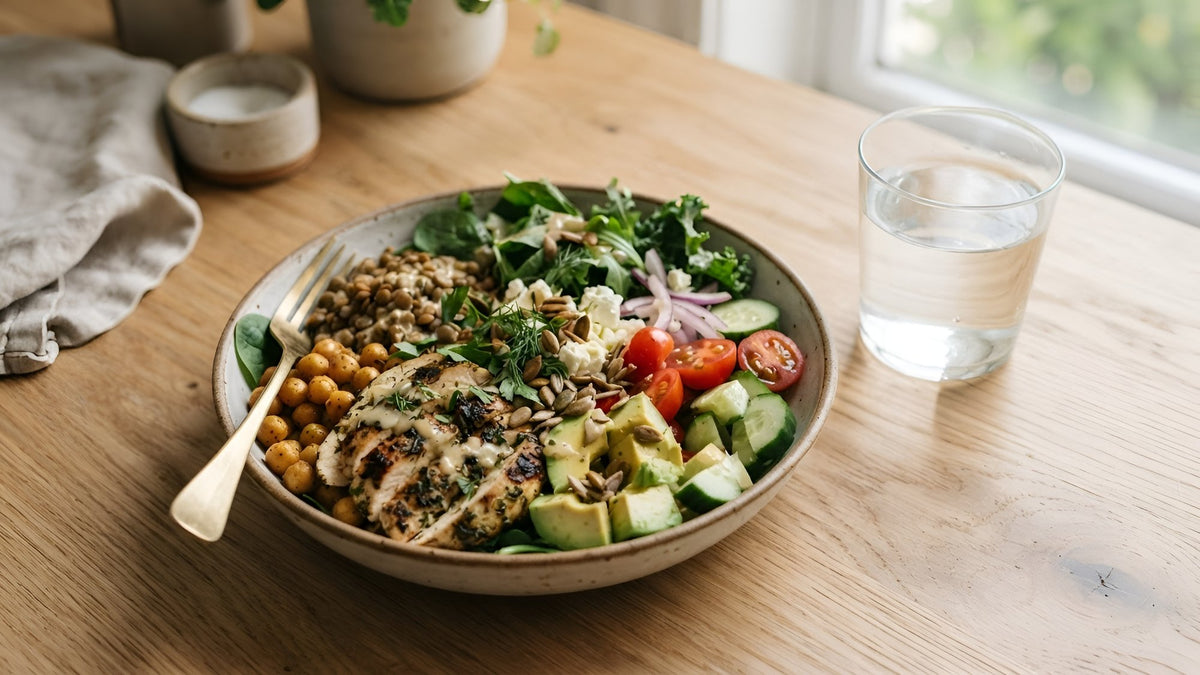
How to control appetite naturally comes down to a few habits that work with your hunger signals instead of against them: protein at every meal, plenty of fiber, enough water, steady meal times, slower eating and, often overlooked, a full night of sleep. None of these needs willpower in the moment. They change how full you feel before the cravings show up.
Below are seven everyday habits, why each one helps, and where a supplement can, and cannot, fit.
Key takeaways
- Protein is the most filling of the three macronutrients, so build each meal around a protein source.
- Soluble fiber thickens with water and slows digestion, which helps you stay full longer.
- Short sleep raises the hunger hormone ghrelin and lowers the fullness hormone leptin.
- A supplement can support appetite control, but it works best on top of these habits, not instead of them.
What controls appetite in the first place?
Appetite is run by a conversation between your gut, your fat tissue and your brain. Ghrelin, made mostly in the stomach, rises before meals and signals hunger. Leptin, made by fat tissue, and gut hormones such as peptide YY and GLP-1 signal fullness after you eat. Stretch receptors in the stomach add their own "that's enough" message.
Habits that help appetite tend to do one of three things: they slow how fast food leaves the stomach, they boost fullness hormones, or they keep hunger hormones from spiking. The seven below hit at least one of those.
How to control appetite naturally: 7 everyday habits
1. Put protein at the center of each meal
Protein is the most filling of the three macronutrients, so build each meal around a protein source. Eggs, Greek yogurt, fish, chicken, beans, lentils and tofu all count. Research suggests protein raises fullness hormones and lowers ghrelin more than the same calories from refined carbohydrates. Breakfast is where many people fall short, so start there.
2. Eat more fiber, especially soluble fiber
Soluble fiber thickens with water and slows digestion, which helps you stay full longer. Oats, beans, lentils, chia, apples, citrus and barley are good sources. Most adults eat well below the 25 to 38 grams a day that dietary guidelines suggest, so adding fiber slowly, with more water, is a realistic first step. Our guide to soluble vs. insoluble fiber explains the difference.
3. Drink water before and with meals
Thirst is easy to mistake for hunger. A glass of water before a meal adds volume to the stomach and gives fullness signals a head start. Soups and water-rich foods such as cucumber, berries and leafy greens do the same.
4. Protect your sleep
Short sleep raises the hunger hormone ghrelin and lowers the fullness hormone leptin. In a well-known study, two nights of four-hour sleep shifted both hormones and left people hungrier, especially for sweet and starchy foods. The CDC recommends at least seven hours a night for adults.
5. Slow down and eat without screens
Fullness signals take time to reach the brain. Eating slowly, putting your fork down between bites and eating away from screens gives those signals a chance to arrive before you finish the plate.
6. Keep regular meal times
Long gaps between meals tend to end in a hungry, rushed meal or a vending-machine snack. Eating at roughly the same times each day helps your hunger rhythm settle into a pattern you can plan around.
7. Manage stress and move every day
Stress can push some people toward comfort foods. A daily walk, a few minutes of breathing or stretching, and regular strength training help with mood, sleep and energy, all of which feed back into appetite.
A simple day that puts the habits together
| Time | Habit |
|---|---|
| Breakfast | Eggs or Greek yogurt with berries and oats, plus a glass of water |
| Lunch | Beans or chicken over greens and whole grains, eaten away from the desk |
| Afternoon | A 15-minute walk and a piece of fruit if you are truly hungry |
| Dinner | Fish or tofu, a large serving of vegetables, eaten slowly |
| Evening | Screens down, lights low, aiming for seven or more hours of sleep |
Where a supplement can fit
Supplements are the last layer, not the first. Some ingredients have been studied for their role in fullness, such as soluble fibers like glucomannan from konjac root, which expands in the stomach. The NIH Office of Dietary Supplements reviews these ingredients and finds the evidence limited, which is why they belong on top of the basics, not in place of them.
If you want botanical support for appetite, Appetite Balance+™ pairs raspberry ketones with African mango seed and aids in appetite control, supports healthy metabolism and promotes energy and vitality.* The label direction is two veggie capsules once a day, 20-30 minutes before a meal. It contains caffeine, so take it early in the day and count it with your coffee. It is third-party tested every batch and manufactured in USA with globally sourced materials in an NSF-certified, GMP-certified, FDA-registered facility; see our standards.
Pregnant or nursing mothers, anyone under 18 and anyone with a known medical condition should talk to a physician before using any appetite or metabolism formula.
Frequently asked questions about how to control appetite naturally
What is the fastest natural way to feel full?
Start a meal with a glass of water and a protein or fiber-rich food such as a broth-based soup, a salad with beans, or Greek yogurt. Volume, protein and fiber all send fullness signals early in the meal.
Why am I hungrier after a bad night's sleep?
Short sleep shifts appetite hormones: ghrelin goes up and leptin goes down. That combination makes you hungrier the next day, often for sweet and starchy foods.
Does drinking water really reduce appetite?
Water adds volume to the stomach and helps you tell thirst apart from hunger. It is not a substitute for food, but a glass before meals is an easy habit to try.
Which foods keep you full the longest?
Foods that combine protein and fiber tend to keep you full longest: beans and lentils, eggs with whole grains, Greek yogurt with oats or chia, and fish with vegetables.
Can a supplement replace these habits?
No. A supplement can support appetite control alongside a sensible diet and activity routine, but protein, fiber, sleep and regular meals do most of the work.
Related reading from our Wellness Hub
- Weight-Support Supplements: Realistic Expectations
- Soluble vs. Insoluble Fiber: What Each Does and How to Get Enough
- Raspberry Ketones: Meet Appetite Balance+
Sources
- Taheri S, et al. Short sleep duration is associated with reduced leptin, elevated ghrelin. PLoS Medicine, 2004
- Spiegel K, et al. Sleep curtailment in healthy young men is associated with decreased leptin, elevated ghrelin, and increased hunger and appetite. Annals of Internal Medicine, 2004
- Harvard T.H. Chan School of Public Health, The Nutrition Source: Protein
- Harvard T.H. Chan School of Public Health, The Nutrition Source: Fiber
- CDC: About Sleep
- NIH Office of Dietary Supplements: Dietary Supplements for Weight Loss, Fact Sheet for Health Professionals
Individual results vary.
*These statements have not been evaluated by the Food and Drug Administration. This product is not intended to diagnose, treat, cure, or prevent any disease.

