
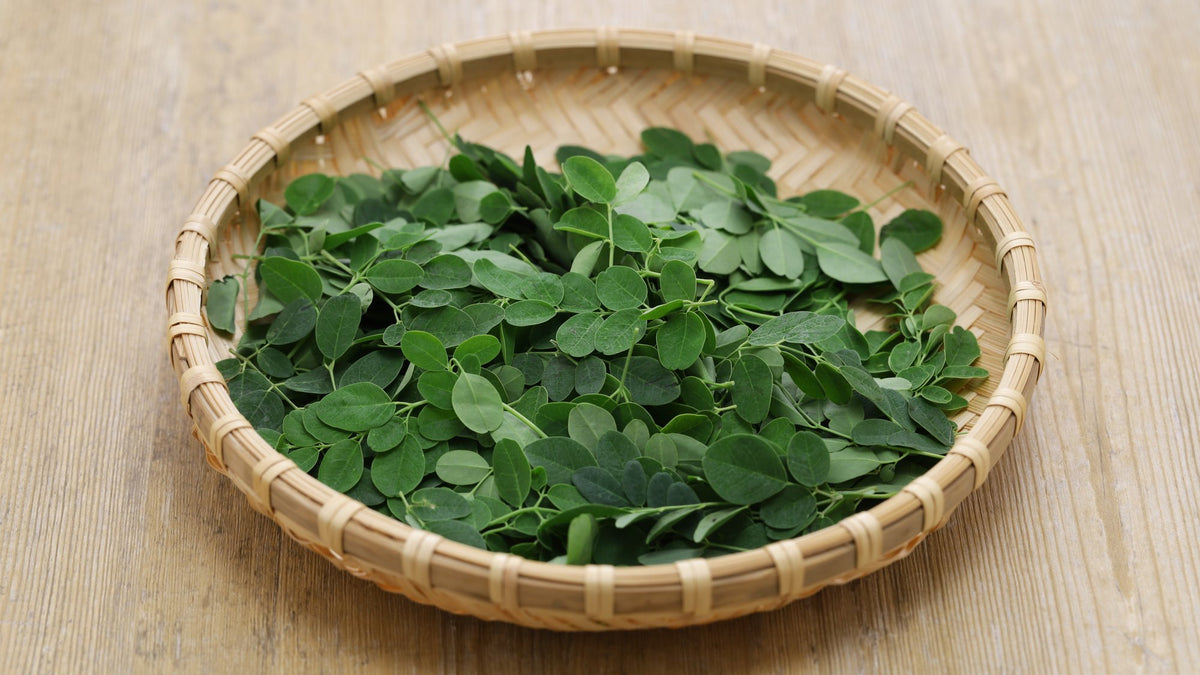
Moringa side effects are usually mild: the most common are an upset stomach, gas, loose stools or heartburn, mostly at larger amounts. Moringa leaf has a long history as a food, and reviews of the research describe leaf preparations as well tolerated at typical amounts. Is it safe to take every day? For most healthy adults who follow the label, yes. The exceptions are pregnancy, certain medications and very large doses, which we cover below.
Moringa is often called a superfood, and that label can make it sound as if more is always better. It is not. Like any plant you take daily, moringa deserves a clear look at who it suits, how much is sensible and when to check with a provider first.
Key takeaways
- Moringa side effects are usually mild: the most common are an upset stomach, gas, loose stools or heartburn, mostly at larger amounts.
- The leaf is the part eaten as food; the root and bark are different and are not recommended in pregnancy.
- Moringa may interact with some medications, so check with your healthcare provider if you take any.
- Taking moringa with food and staying at the labeled amount are the two simplest ways to keep it comfortable.
What are the side effects of moringa?
Most reported moringa side effects involve digestion. Moringa leaf is rich in fiber and in peppery plant compounds called isothiocyanates, and both can be a lot for a sensitive stomach. Reported effects include:
- Stomach upset or nausea, especially on an empty stomach.
- Gas or bloating in the first days of use.
- Loose stools, mainly with larger amounts of leaf powder.
- Heartburn in people prone to reflux.
- A strong, grassy taste with powders and teas (not an issue with capsules).
These effects tend to be dose-related. In a 2015 review of the safety and efficacy of Moringa oleifera, the authors noted a high degree of safety for leaf preparations in animal studies, and no adverse effects reported in the human studies they reviewed. Those human studies were small and short, so "well tolerated" is the fair summary, not "risk-free."
Is it safe to take moringa every day?
For most healthy adults, a moderate daily amount of moringa leaf appears to be well tolerated. Human studies have commonly used a few grams of leaf powder a day, and moringa leaves are eaten as a vegetable in many countries. A daily capsule routine at the labeled amount (800 mg of leaf) sits below that range.
Three things make daily use safer:
- Stay at the labeled amount. Labels say "do not exceed recommended dose" for a reason.
- Take it with food. Food in your stomach is one of the simplest ways to keep moringa comfortable.
- Choose a tested product. Plant powders can carry contaminants from soil and water, so look for third-party testing on every batch.
Leaf vs. root, bark and seed: why the part matters
The leaf is the part eaten as food; the root and bark are different and are not recommended in pregnancy. Moringa root and bark contain compounds that are not found in the same amounts in the leaf, and older reports raised concerns about them. Seeds and seed oil are also used, but they are a separate ingredient with their own profile.
When you read a label, look for the plant part in brackets. A leaf product will say so. Moringa+, for example, contains only moringa leaf (Moringa oleifera), 800 mg per two-capsule serving, with no root, bark or blend.
Who should be careful with moringa?
| Situation | Why it matters | What to do |
|---|---|---|
| Pregnant or nursing | Not enough safety research; root and bark are a concern | Talk with your healthcare provider before use |
| Taking a blood thinner | Leafy greens, moringa included, contain vitamin K | Ask your provider; keep your intake steady |
| Taking medication for blood sugar, blood pressure or thyroid | Moringa may interact with some of these medicines | Check with your provider or pharmacist first |
| Under 18 | Supplement labels are written for adults | Consult a physician |
| Sensitive stomach or reflux | Fiber and peppery compounds | Take with a meal; capsules over powder |
Moringa may interact with some medications, so check with your healthcare provider if you take any. This matters most for prescription medicines you take every day.
How to start moringa comfortably
- Read the label first, including the plant part and the suggested use.
- Take it with a meal and a full glass of water.
- Keep the amount steady from day to day.
- Watch how you feel for the first week. Mild gas usually settles; if stomach upset continues, stop and talk with your provider.
- Count every source. Moringa also appears in many greens powders, so if you take one of those as well, you are getting moringa twice.
The Moringa+ label says to take two capsules once a day with food.
What the benefits side looks like
Side effects are only half of the picture. Moringa leaf naturally contains iron, calcium and vitamins A, C and E, along with antioxidant plant compounds.* People take it for steady energy without caffeine, and to support digestion.* Our article on moringa benefits covers that side in depth.
Every batch of Moringa+ is third-party tested for purity and potency by an outside lab, and it is manufactured in USA with globally sourced materials in an NSF-certified, GMP-certified, FDA-registered facility. See Our Standards for how that works.
Frequently asked questions about moringa side effects
Can moringa upset your stomach?
Yes, it can, especially on an empty stomach or at larger amounts. Moringa leaf is high in fiber and peppery plant compounds. Taking it with food and staying at the labeled amount usually helps.
Is moringa safe for the kidneys and liver?
Reviews of the research describe moringa leaf as well tolerated at typical amounts, but human studies are small. If you have a kidney or liver condition, talk with your healthcare provider before taking moringa or any supplement.
Can I take moringa while pregnant?
There is not enough research to call it safe in pregnancy, and moringa root and bark are a known concern. Talk with your healthcare provider before using any moringa product while pregnant or nursing.
Does moringa interact with medications?
It may. Moringa contains vitamin K, which matters with blood thinners, and it may interact with some medicines for blood sugar, blood pressure or thyroid. Check with your provider or pharmacist first.
How much moringa is too much?
Follow the label of your product and do not exceed it. Larger amounts are more likely to cause stomach upset, and more is not better.
Related reading from our Wellness Hub
- Moringa Benefits: What This Green Superfood Actually Supports
- Bloating: Why It Happens and What Actually Helps
- How to Read a Supplement Certificate of Analysis (COA)
Sources
- Stohs SJ, Hartman MJ. Review of the Safety and Efficacy of Moringa oleifera. Phytotherapy Research, 2015 (PMC)
- NCBI Bookshelf: Moringa
- A Comprehensive Review on the Ethnomedicinal and Pharmacological Aspects of Moringa oleifera (PMC)
- NIH Office of Dietary Supplements: Vitamin K Fact Sheet for Consumers
Individual results vary.
*These statements have not been evaluated by the Food and Drug Administration. This product is not intended to diagnose, treat, cure, or prevent any disease.

