
There is resveratrol in red wine, but not much: a 5-ounce glass contains roughly 0.2 to 0.5 mg, according to the Linus Pauling Institute at Oregon State University. The amount varies widely by grape, region and winemaking, and some wines contain almost none. Red grapes, boiled peanuts and certain berries contain small amounts too. By comparison, resveratrol supplements are measured in hundreds of milligrams. So if resveratrol is what you are after, wine is not a practical source, and health authorities do not recommend starting to drink for any health benefit.
Key takeaways
- A 5-ounce glass of red wine contains roughly 0.2 to 0.5 mg of resveratrol.
- Wine holds little resveratrol, and the amount swings with the grape and how the wine is made.
- Red beats white because red wine ferments with the grape skins, where resveratrol sits.
- Do not start drinking alcohol for a health benefit; health authorities advise against it.
How much resveratrol is in red wine?
A 5-ounce glass of red wine contains roughly 0.2 to 0.5 mg of resveratrol. The Linus Pauling Institute reports trans-resveratrol in red wines ranging from about 0.2 to 14.3 mg per liter, with averages that differ by grape. In its summary, Cabernet Sauvignon averaged around 1.7 mg per liter and Pinot Noir around 3.6 mg per liter. So a typical 5-ounce glass holds a fraction of a milligram, and even the richest wines reported come to only about 2 mg a glass.
Resveratrol content in wine is low and varies widely by grape variety and winemaking. Grapes grown in cooler, damper climates tend to make more resveratrol, because the plant produces it to defend itself against fungi and stress. That is part of why thin-skinned grapes such as Pinot Noir, which are prone to fungal pressure, often come out ahead.
Why red wine and not white?
Red wine has more resveratrol than white wine because the grape skins stay in contact with the juice during fermentation. Resveratrol is concentrated in the skins. White wine is usually made with the skins removed early, so far less resveratrol carries over. Rosé sits in between.
Where the red wine and resveratrol story came from
In the early 1990s, researchers drew attention to what became known as the "French paradox," the observation that heart health statistics in France looked better than expected given a diet rich in saturated fat. Red wine became one of the proposed explanations, and resveratrol, which had recently been found in wine, became a candidate ingredient. In 2003 a study in Nature reported that resveratrol activated a sirtuin enzyme and extended lifespan in yeast, and interest grew from there.
Since then, the picture has become more modest. The Linus Pauling Institute notes that resveratrol is only a minor compound among the many polyphenols in grapes and wine, and the amounts in a glass are small. For the antioxidant side of this story, see our explainer, Resveratrol and Antioxidants: The "Longevity" Molecule, Explained.
Which foods contain resveratrol?
Resveratrol shows up in a short list of everyday foods, always in small amounts. These figures are from the Linus Pauling Institute:
| Food | Serving | Total resveratrol |
|---|---|---|
| Red wine | 5 ounces | about 0.2 to 0.5 mg |
| Red grapes | 1 cup | 0.24 to 1.25 mg |
| Peanuts, boiled | 1 cup | 0.32 to 1.28 mg |
| Peanuts, raw | 1 cup | 0.01 to 0.26 mg |
| Peanut butter | 1 cup | 0.04 to 0.13 mg |
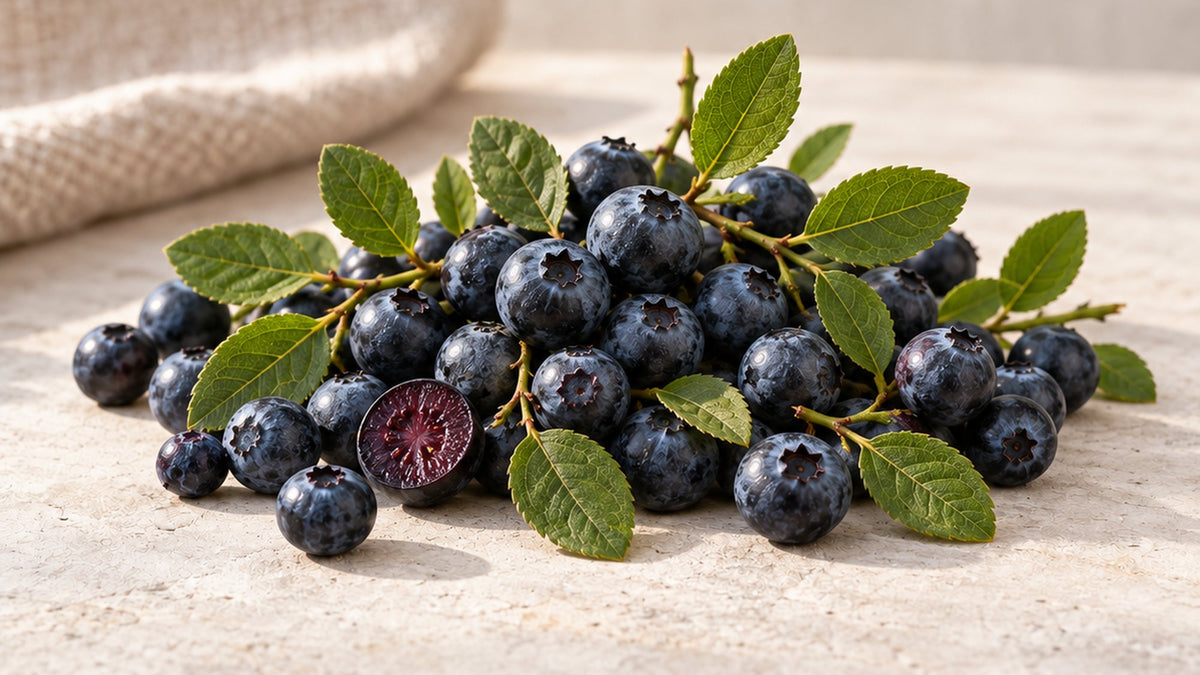
Blueberries, bilberries and cranberries also contain small amounts of resveratrol and related compounds, according to a 2004 analysis in the Journal of Agricultural and Food Chemistry. Berries are worth eating for many reasons, but resveratrol is a minor one.
If you want more of these plant compounds on your plate, a few easy habits help:
- Keep a bowl of red grapes or a bag of frozen blueberries on hand for snacks and breakfast.
- Add a small handful of peanuts or a spoon of peanut butter to oatmeal or yogurt.
- Build meals around color: berries, leafy greens, beans and whole grains bring a wide range of polyphenols, not just resveratrol.
- Choose whole fruit over juice when you can, so you keep the skins and the fiber.
Is red wine a good way to get resveratrol?
No. There are two problems. The first is the amount: a typical glass delivers a fraction of a milligram, and you cannot know how much a given bottle contains. The second is the alcohol. Health authorities do not recommend starting to drink alcohol for any health benefit. The National Institute on Alcohol Abuse and Alcoholism describes drinking patterns and their definitions, and U.S. dietary guidance notes that drinking less is better for health than drinking more.
If you enjoy a glass of wine with dinner, enjoy it for what it is. If you are looking for resveratrol specifically, food and supplements are more predictable routes.
How do supplements compare?
Most resveratrol supplements are made from Japanese knotweed root, one of the richest natural sources, and are measured in hundreds of milligrams rather than fractions of one. That makes the amount predictable in a way wine cannot be.
One example is Resveratrol+, which provides a 600 mg resveratrol blend from two Japanese knotweed root extracts in each capsule, taken once a day. Blend totals are on the label; the amounts inside each blend are not. Resveratrol+ promotes heart and vascular health and supports cellular health and longevity.* Every batch is third-party tested for purity and potency and made in an NSF-certified, GMP-certified, FDA-registered U.S. facility; see our standards.
Two practical notes. Resveratrol is absorbed well but broken down quickly by the body, so consistency matters more than any single dose. And supplement amounts of resveratrol may increase the risk of bruising or bleeding when combined with blood thinners such as warfarin, so talk with your healthcare provider first if you take one, or if you are pregnant, nursing, or have a medical condition.
A heart-friendly routine is about far more than one compound. Our guide to heart-healthy habits: food, movement and sleep covers the foundations.
Frequently asked questions about resveratrol in red wine
Which red wine has the most resveratrol?
Pinot Noir often measures among the highest, in part because thin-skinned grapes grown in cooler, damper regions tend to make more. But content varies a lot from bottle to bottle, so no label can promise a specific amount.
Does white wine have resveratrol?
Very little. White wine is usually made with the skins removed early, and the skins are where resveratrol is concentrated.
Is there resveratrol in grape juice?
Some, mostly in a bound form called piceid. Like wine, the amount is small and varies by grape and processing.
Does non-alcoholic red wine have resveratrol?
It can, since resveratrol comes from the grape skins rather than the alcohol. The amount depends on the grape and the process, and it is small either way.
How much resveratrol is in a resveratrol supplement compared with wine?
Supplements are typically measured in hundreds of milligrams per serving, while a glass of red wine provides a fraction of a milligram. Read the supplement label to see whether the number is pure trans-resveratrol or a blend weight.
Related reading from our Wellness Hub
- Resveratrol and Antioxidants: The "Longevity" Molecule, Explained
- Heart-Healthy Habits: Food, Movement and Sleep Basics
Sources
- Linus Pauling Institute, Oregon State University: Resveratrol (food sources, wine content, safety)
- Rimando AM, et al. Resveratrol, pterostilbene, and piceatannol in vaccinium berries. Journal of Agricultural and Food Chemistry, 2004
- Howitz KT, et al. Small molecule activators of sirtuins extend Saccharomyces cerevisiae lifespan. Nature, 2003
- National Institute on Alcohol Abuse and Alcoholism: Drinking Patterns and Their Definitions
Individual results vary.
*These statements have not been evaluated by the Food and Drug Administration. This product is not intended to diagnose, treat, cure, or prevent any disease.

