
Zinc explained in one line: zinc is an essential mineral, so you need a steady supply from food or a supplement. It supports normal immune function, helps your body make proteins and DNA, and plays a part in taste, smell and skin health. Most adults need 8 to 11 mg a day, and many get it from meat, seafood, seeds and beans. Below, we cover what zinc does, how much you need, the best food sources, the zinc forms you see on a label, and where our Immune+ formula fits.
Key takeaways
- Zinc is an essential mineral, so a steady intake from food or a supplement matters.
- Adults need about 8 to 11 mg of zinc daily; 40 mg a day from all sources is the upper limit.
- Oysters lead the zinc foods; beef, crab, pumpkin seeds and beans are also good sources.
- Immune+ gives 16 mg of zinc per 2-capsule serving, 146% of the Daily Value.
- Add it up: Immune+ (16 mg) plus 3 ounces of oysters (about 28 to 32 mg) on the same day goes over the 40 mg upper limit, which counts food and supplements together.
- The Immune+ label reads: "Do not exceed recommended dose. Pregnant or nursing mothers, children under the age of 18, and individuals with a known medical condition should consult a physician before using this or any dietary supplement."
- The NIH Office of Dietary Supplements says zinc "may interact with certain medications, such as quinolone antibiotics, tetracycline antibiotics, and penicillamine," and that "some diuretics can decrease serum zinc concentrations by increasing zinc excretion in urine."
What does zinc do in the body?
Zinc is a trace mineral, which means you need it in small amounts, but it shows up almost everywhere. According to the NIH Office of Dietary Supplements, zinc is involved in the activity of hundreds of enzymes. Those enzymes help with:
- Normal immune function. Immune cells rely on zinc to develop and work the way they should.
- Protein and DNA building. Every time your body makes new cells, zinc is part of the process.
- Skin health. Zinc supports the normal renewal of skin.
- Taste and smell. These senses depend in part on zinc.
How much zinc do you need per day?
The recommended amount depends on sex and life stage. The NIH Office of Dietary Supplements (ODS) lists 8 to 11 mg of zinc a day for most adults, 11 mg during pregnancy and 12 mg while breastfeeding. The ODS also lists an upper limit of 40 mg a day from all sources and a label Daily Value of 11 mg.
| Group | Recommended per day |
|---|---|
| Most adults | 8 to 11 mg, depending on sex |
| Pregnancy | 11 mg |
| Breastfeeding | 12 mg |
| Upper limit, all adults (food plus supplements) | 40 mg |
The upper limit is worth knowing. The ODS notes that doses of 50 mg of zinc or more, taken for weeks, can interfere with copper absorption, and that the 40 mg upper limit is based on zinc's effect on copper status. Add it up: Immune+ gives 16 mg of zinc per 2-capsule serving, and the adult upper limit the ODS lists is 40 mg a day from food and supplements together. Three ounces of oysters alone has about 28 to 32 mg, per the ODS food table, so a serving of oysters plus Immune+ on the same day goes over the upper limit. If you also take a multivitamin or another immune formula, add up the zinc on each label and in your food.
What foods are high in zinc?
Meat, poultry and seafood are rich in zinc, and some plant foods, such as legumes and whole grains, are good sources too, per Harvard's Nutrition Source. The amounts below are approximate, based on the NIH Office of Dietary Supplements food table.
- Oysters, 3 ounces: about 28 mg cooked (Pacific) to 32 mg raw (Eastern, farmed), more zinc per serving than any other food, per the ODS.
- Beef, 3 ounces cooked: about 4 mg.
- Crab, 3 ounces cooked: about 3 mg.
- Pork loin chop, 3 ounces broiled: about 2 mg.
- Pumpkin seeds, 1 ounce: about 2 mg.
- Lentils, half a cup boiled: about 1.3 mg.
- Plain Greek yogurt, 6 ounces: about 1 mg.
Plant foods carry a catch. Whole grains, beans and seeds contain phytates, natural compounds that bind zinc and reduce how much you absorb. The ODS notes that people who follow vegetarian or vegan diets usually get less zinc and have lower blood levels of zinc than people who eat animal products, and that they might benefit from a zinc supplement. The ODS adds that soaking beans, grains and seeds in water for several hours before cooking, and eating fermented foods, may help you absorb more zinc.
Which zinc forms will you see on a supplement label?
Zinc in supplements is always attached to another compound, and the label names that partner in brackets, for example "Zinc (as zinc oxide)". The number on the label is the amount of elemental zinc, so 16 mg means 16 mg of zinc itself. Common forms include:
- Zinc oxide - a concentrated, stable form used widely in multivitamins and immune formulas.
- Zinc gluconate - common in tablets and lozenges.
- Zinc citrate - often found in capsules and chewables.
- Zinc picolinate, sulfate and acetate - other forms you may see.
Research on absorption between forms is limited. In one small 2014 trial, 15 healthy young adults took 10 mg of zinc as zinc citrate, zinc gluconate and zinc oxide, one form at a time and without food. Absorption was about 61% from zinc citrate and zinc gluconate and about 50% from zinc oxide, and the authors noted that zinc oxide may be minimally absorbed by some people. The trial tested zinc on its own, not a multi-ingredient formula. A clear label, a sensible daily amount and a tested product also matter. Immune+ uses zinc oxide at 16 mg per 2-capsule serving, more than the trial dose, and the label tells you exactly how much.
Meet Immune+: zinc with nine more ingredients

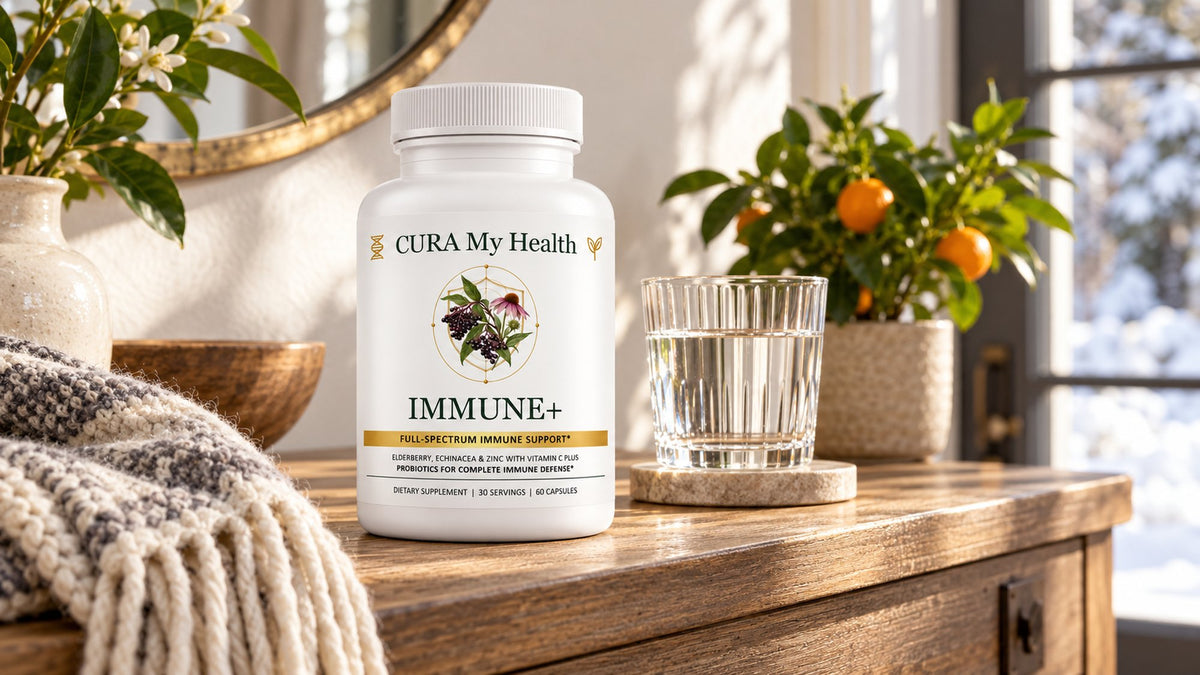
Where most immune bottles stop at vitamin C and zinc, Immune+ builds a ten-ingredient daily formula around European elderberry extract. Immune+ provides 16 mg of zinc (as zinc oxide) in each 2-capsule serving, alongside vitamin C, elderberry and seven more ingredients. That is 146% of the Daily Value. The 40 mg upper limit counts zinc from food and supplements together, so add the 16 mg in Immune+ to the zinc in your food and any other supplement.
Here is what is in each 2-capsule serving, straight from the label:
- European Elderberry Extract (Sambucus nigra) (fruit) - 300 mg
- Vitamin C (as ascorbic acid) - 180 mg (200% DV)
- Vitamin E (DL-alpha tocopherol acetate) - 20 mg (133% DV)
- Vitamin B6 (as pyridoxine HCl) - 3.4 mg (200% DV)
- Zinc (as zinc oxide) - 16 mg (146% DV)
- Echinacea Purpurea Powder (Echinacea purpurea) (aerial) - 200 mg
- L-Glutamine HCl - 200 mg
- Garlic Powder (Allium sativum) (bulb) - 100 mg
- Turmeric 95% Curcuminoids (Curcuma longa) (root) - 100 mg
- Lactobacillus acidophilus - 4.8 billion CFU
Immune+ supports a healthy immune system, helps maintain antioxidant defenses and supports seasonal wellness.* Every amount is on the label, with no proprietary blend, so you can add up your zinc from all sources with confidence.
How to take Immune+
The suggested use is two veggie capsules once a day. For best results, take them 20 to 30 minutes before a meal with an 8 fl oz glass of water, or as directed by your healthcare professional. One bottle holds 60 capsules, which is 30 days when used as directed. Do not exceed the recommended dose.
Why testing matters for a mineral formula
A mineral is only useful if the amount on the label is the amount in the capsule. Every batch of Immune+ is third-party tested by an outside lab for purity and potency. It is manufactured in USA with globally sourced materials, in an NSF-certified, GMP-certified, FDA-registered U.S. facility. It is gluten free, non-GMO, vegan and free of the top 9 allergens. You can read how we test on our Our Standards page, and every order is backed by our 60-day guarantee.
Who should check with a healthcare professional first?
Zinc is safe for most adults at label amounts, but a few groups should talk to their healthcare professional before adding a zinc supplement:
- Anyone who is pregnant or nursing, and anyone with a known medical condition.
- People taking quinolone or tetracycline antibiotics, or penicillamine. The NIH Office of Dietary Supplements says zinc "may interact with certain medications, such as quinolone antibiotics, tetracycline antibiotics, and penicillamine." It says taking the antibiotic "at least 2 hours before or 4 to 6 hours after the zinc supplement minimizes this interaction," and that zinc and penicillamine should be taken "at least 1 hour apart."
- People taking thiazide diuretics. The NIH Office of Dietary Supplements says thiazide diuretics "increase zinc excretion in the urine," and that people "taking these and other medications on a regular basis should discuss their zinc status with their health care providers."
- Anyone already taking another product that contains zinc: add the 16 mg in Immune+ to it and to the zinc in your food, so the total stays under the 40 mg upper limit.
Immune+ is for adults. Keep it out of reach of children, and do not use it if the safety seal is damaged or missing.
Frequently asked questions about zinc
What is zinc good for?
Zinc supports normal immune function, protein and DNA building, skin renewal, and taste and smell. It is an essential mineral, so a steady intake from food or a supplement is important.
How much zinc should I take a day?
Most adults need 8 to 11 mg of zinc a day from all sources. The upper limit for adults is 40 mg a day. Check every label you take, because zinc appears in many multivitamins and immune formulas. Add it up: Immune+ gives 16 mg per 2-capsule serving, so the zinc from your food and any other supplement should fit in the 24 mg left under the upper limit. The Immune+ label says: "Do not exceed recommended dose. Pregnant or nursing mothers, children under the age of 18, and individuals with a known medical condition should consult a physician before using this or any dietary supplement." The NIH Office of Dietary Supplements says zinc "may interact with certain medications, such as quinolone antibiotics, tetracycline antibiotics, and penicillamine," and that "some diuretics can decrease serum zinc concentrations by increasing zinc excretion in urine."
Can I get enough zinc from food alone?
Many people can, especially if they eat seafood, meat, seeds and beans. Phytates in grains and beans reduce how much zinc the body absorbs, and the NIH Office of Dietary Supplements notes that vegetarians and vegans might benefit from a zinc supplement.
Is zinc oxide a good form of zinc?
Zinc oxide is a concentrated, stable form used widely in multivitamins and immune formulas. In one small 2014 trial of healthy young adults taking 10 mg of zinc without food, zinc oxide was absorbed less than zinc citrate or zinc gluconate (about 50% vs about 61%), and research comparing forms is limited. Immune+ uses zinc oxide and lists the exact amount, 16 mg per 2-capsule serving, more than the trial dose.
How much zinc is in Immune+?
Each 2-capsule serving of Immune+ provides 16 mg of zinc, which is 146% of the Daily Value. The adult upper limit is 40 mg a day from food and supplements together, so add up the zinc in your food and any other supplement too. The suggested use is two veggie capsules once a day, taken 20 to 30 minutes before a meal with a glass of water. The label warning reads: "Do not exceed recommended dose. Pregnant or nursing mothers, children under the age of 18, and individuals with a known medical condition should consult a physician before using this or any dietary supplement. Keep out of reach of children. Do not use if safety seal is damaged or missing. Store in a cool, dry place." On medicines, the NIH Office of Dietary Supplements notes that zinc "may interact with certain medications, such as quinolone antibiotics, tetracycline antibiotics, and penicillamine." It adds that "some diuretics can decrease serum zinc concentrations by increasing zinc excretion in urine."
Related reading from our Wellness Hub
- Vitamin C and Zinc Together: What Each Nutrient Does
- Immune+ Ingredients: What Each of the Ten Actives Does
- How to Read a Supplement Certificate of Analysis (COA)
Sources
- NIH Office of Dietary Supplements - Zinc: Fact Sheet for Health Professionals, updated January 6, 2026
- NIH Office of Dietary Supplements - Zinc: Fact Sheet for Consumers, updated October 4, 2022
- Harvard T.H. Chan School of Public Health - The Nutrition Source: Zinc, updated July 22, 2025
- Wegmüller R, et al. Zinc absorption by young adults from supplemental zinc citrate is comparable with that from zinc gluconate and higher than from zinc oxide. J Nutr. 2014;144(2):132-136.
Individual results vary.
*These statements have not been evaluated by the Food and Drug Administration. This product is not intended to diagnose, treat, cure, or prevent any disease.

