Is inositol a B vitamin? Not technically. Inositol was once called "vitamin B8" and is still grouped with the B vitamins on many labels, but it is a sugar alcohol that your body can make on its own from glucose, so it does not meet the definition of an essential vitamin. You also get it from everyday foods such as fruit, beans, grains and nuts. Here is what inositol actually is, why the B-vitamin label stuck, and where it comes from.
Key takeaways
- The body makes inositol from glucose, so it is not a true vitamin.
- It was called vitamin B8 for decades because it was discovered alongside the B vitamins.
- Myo-inositol is the most common form, and D-chiro inositol is made from it.
- Fruit (especially citrus), beans, whole grains and nuts supply the most inositol from food.
- Supplements are used when people want a measured amount of a specific form.
Is inositol a B vitamin or not?
Inositol is not a true vitamin, because the body can make it from glucose. A vitamin, by definition, is a compound your body needs but cannot produce in sufficient amounts, so it must come from food. Your kidneys make inositol every day, and other tissues make some as well. That is why nutrition scientists now describe it as a "vitamin-like" nutrient or a pseudovitamin rather than a member of the B family.
Why it was called vitamin B8
It was called vitamin B8 for decades because it was discovered alongside the B vitamins. Early nutrition research in the 1930s and 1940s grouped together a set of water-soluble growth factors found in yeast and liver, and inositol was one of them. Later work showed that people do not develop a deficiency disease when inositol is missing from the diet, so it was dropped from the official vitamin list. The "B8" nickname survived on supplement labels and in casual use. You may also see biotin called B8 in some countries, which adds to the confusion.
What does inositol do in the body?
Inositol is part of every cell membrane. Inside cells it forms "second messengers," small molecules that pass a signal from a hormone at the cell surface to the machinery inside. Insulin, follicle-stimulating hormone (FSH) and several brain chemicals rely on inositol-based messengers to deliver their instructions. That role in cell signaling is why researchers study it for hormonal balance, glucose metabolism and mood.
The two forms you will see on labels
- Myo-inositol: the most common form in the body and in food.
- D-chiro inositol: made from myo-inositol by an enzyme, and found in smaller amounts.
Different tissues keep the two in different ratios, which is why supplements often combine them. Our guide Myo-inositol vs. D-chiro-inositol explains the 40:1 ratio used in many studies.
Which foods are high in inositol?
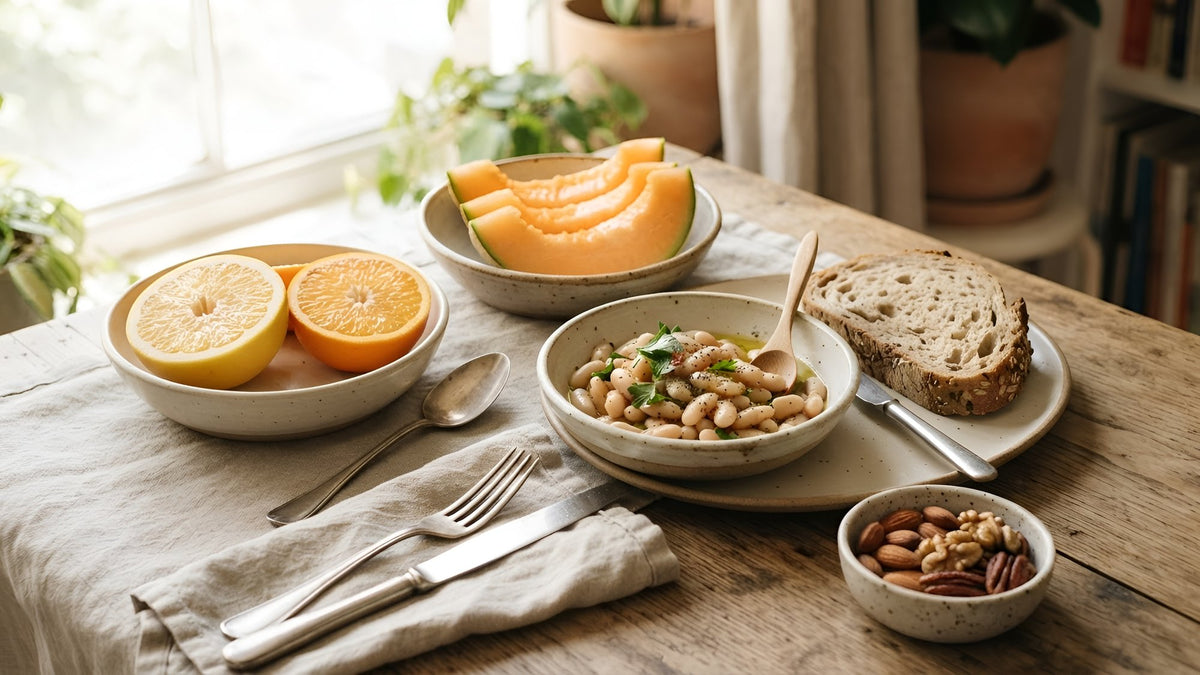
Fruit, beans, whole grains and nuts are the richest everyday sources. In plant foods, much of the inositol is bound up as phytic acid (also called phytate), which gut bacteria and enzymes break down. Researchers who measured the inositol content of common foods found the highest levels in fresh fruit (especially citrus and cantaloupe), beans and other legumes, grains and nuts.
| Food group | Good examples |
|---|---|
| Fruit | Oranges, grapefruit, cantaloupe, blueberries |
| Legumes | Chickpeas, lentils, kidney beans, peas |
| Whole grains | Brown rice, oats, whole wheat |
| Nuts and seeds | Almonds, walnuts, sesame seeds |
| Animal foods | Smaller amounts in meat and eggs |
A diet built on these foods supplies a meaningful amount of inositol each day, along with fiber and other nutrients. Highly processed diets tend to supply less.
How to read inositol on a supplement label
Because inositol is not an official vitamin, labels do not show a % Daily Value for it. Look for three things instead:
- The form. "Inositol" alone usually means myo-inositol. Products that include D-chiro inositol should name it separately.
- The amount of each form. Look for a number in mg per serving for each form, such as myo-inositol and D-chiro inositol.
- The serving size. Check how many capsules or scoops make one serving, so you compare like with like.
Do you need an inositol supplement?
Most people do not need inositol to avoid a deficiency, because the body makes it. Supplements are used when people want a measured amount of a specific form, for a specific reason, and for long enough to judge it. The amounts used in research are hard to reach consistently from food.
Myo Inositol+™ is our women's health formula built that way. Each two-capsule serving provides 1,000 mg of myo-inositol and 25 mg of D-chiro inositol, with both amounts printed on the label and no blend. It supports hormonal balance and reproductive health in women, supports healthy ovarian function, and helps support healthy glucose metabolism.* Every batch is third-party tested for purity and potency by an outside lab; see our standards.
Inositol and the B vitamins in a daily routine
Even though inositol is not a B vitamin, it often travels with them on store shelves, and that is not a bad thing. True B vitamins, such as B6, B12 and folate, are essential nutrients you must get from food or supplements. Inositol is made by the body and supplied by food. Both play roles in energy metabolism and cell signaling, so it makes sense to think about them together, as long as you read each label for what it actually contains.
Is inositol safe?
Inositol is a normal part of the diet and is generally well tolerated. A 2011 review of inositol safety (Carlomagno and Unfer, European Review for Medical and Pharmacological Sciences) looked at clinical trials that used 4 to 30 grams of myo-inositol a day and reported mild digestive side effects, such as nausea, gas and diarrhea, mainly at 12 grams a day or more, though the authors noted that safety information was still scarce. A Myo Inositol+ serving has 1,000 mg of myo-inositol, lower than every dose in those trials.
The Myo Inositol+ label warning reads: "Do not exceed recommended dose. Pregnant or nursing mothers, children under the age of 18, and individuals with a known medical condition should consult a physician before using this or any dietary supplement. Keep out of reach of children. Do not use if safety seal is damaged or missing. Store in a cool, dry place." If you take a medicine that affects blood sugar, also talk with your healthcare provider before adding an inositol supplement.
Frequently asked questions about inositol and B vitamins
Is inositol the same as vitamin B8?
Inositol was once called vitamin B8, and some labels still use the name. Today it is not recognized as a vitamin, because the body can make it. In some countries the name B8 is used for biotin instead.
Is inositol in a B-complex supplement?
Sometimes. Some B-complex formulas include a small amount of inositol, while many do not. Check the Supplement Facts panel if you want to know.
Is inositol a sugar?
Chemically it is a sugar alcohol, a close relative of glucose. It tastes mildly sweet, but it does not act like table sugar in the body, and Myo Inositol+ is sugar-free.
Is inositol vegan?
Inositol itself can be made from plant sources, but capsules and fillers vary. Myo Inositol+ is vegan, vegetarian, gluten-free and non-GMO, in a vegetable (hypromellose) capsule.
Can I get enough inositol from food alone?
A plant-rich diet supplies inositol every day, and the body makes more. Food alone usually does not reach the measured amounts used in research, which is why some people choose a supplement.
Related reading from our Wellness Hub
- Myo-Inositol: How to Take It and What to Expect With Myo Inositol+
- Inositol for Hormonal Balance: Meet Myo Inositol+ (40:1)
- Folate vs. Folic Acid: What's the Difference on a Label?
Sources
- Clements RS Jr, Darnell B. Myo-inositol content of common foods: development of a high-myo-inositol diet. Am J Clin Nutr, 1980
- Bevilacqua A, Bizzarri M. Inositols in insulin signaling and glucose metabolism. Int J Endocrinol, 2018
- Carlomagno G, Unfer V. Inositol safety: clinical evidences. Eur Rev Med Pharmacol Sci, 2011
Individual results vary.
*These statements have not been evaluated by the Food and Drug Administration. This product is not intended to diagnose, treat, cure, or prevent any disease.