How much iodine is in sea moss? There is no single answer: seaweeds naturally contain iodine, and the amount varies widely by species, harvest site, season and processing. Most adults need about 150 mcg of iodine a day, and the adult upper limit is 1,100 mcg, so the honest approach is to count any sea moss product as one more iodine source in your day and to check with a clinician first if you have a thyroid condition.
Key takeaways
- Most adults need about 150 mcg of iodine a day, and the upper limit for adults is 1,100 mcg a day from all sources.
- Iodine in seaweed varies enormously: a 2004 study in the journal Thyroid of 12 edible seaweeds found amounts ranging more than 500-fold.
- Iodine is generally greater in brown seaweeds such as kelp than in green or red ones, a 2021 review in the European Thyroid Journal notes, and regular intake of iodine-rich brown seaweeds, a group that includes bladderwrack, can expose people to excess iodine, particularly with a thyroid disorder or in pregnancy. For pregnant women and children, the same review notes a recommendation to limit brown seaweed to one serving per week.
- The Seamoss+™ label lists the seaweed amounts, 500 mg of Irish moss and 500 mg of bladderwrack, but not an iodine amount.
- The Seamoss+ label also says: Do not exceed recommended dose. Pregnant or nursing mothers, children under the age of 18, and individuals with a known medical condition should consult a physician before using this or any dietary supplement.
- If you have a thyroid condition or take thyroid medication, talk with your healthcare provider before starting any sea moss product.
Why iodine matters
Your thyroid uses iodine to make thyroid hormones, which help regulate metabolism and are essential for normal growth and development. The body cannot make iodine, so it has to come from food: iodized salt, dairy, eggs, seafood and seaweed are the main sources in a typical diet.
The thyroid works best within a range. A review titled "Iodine, Seaweed, and the Thyroid" makes the point plainly: even a minor shortfall can affect the thyroid, and so can too much. That is why "more iodine" is not automatically better. In the United States, iodized salt and dairy cover much of the need for many people, so the question is usually how a seaweed product adds to an existing intake.
How much iodine do adults need?
The NIH Office of Dietary Supplements lists these daily amounts (the upper limits shown are for ages 19 and older; for ages 14 to 18, including pregnancy and breastfeeding, the upper limit is 900 mcg):
| Group | Recommended daily intake | Upper limit |
|---|---|---|
| Adults | 150 mcg | 1,100 mcg |
| During pregnancy | 220 mcg | 1,100 mcg |
| While breastfeeding | 290 mcg | 1,100 mcg |
Most adults need about 150 mcg of iodine a day, and the upper limit for adults is 1,100 mcg a day from all sources. For comparison, NIH notes that a quarter teaspoon of iodized salt supplies roughly 78 mcg, and many multivitamins contain iodine as well.
How much iodine is in sea moss and other seaweeds?
This is where labels get difficult. Iodine in seaweed varies enormously: a 2004 study in the journal Thyroid of 12 edible seaweeds found amounts ranging more than 500-fold. Nori was at the low end, at about 16 mcg per gram, and processed kelp granules were at the top, at over 8,000 mcg per gram. In the same study, iodine in two Namibian kelps varied more than tenfold, lowest in sun-bleached blades and highest in freshly cut young blades. Iodine also dissolves in cooking water and can be lost in humid storage.
The type of seaweed matters most:
- Red seaweeds, such as Irish moss (Chondrus crispus) and nori, generally sit lower on the iodine scale, though they still vary.
- Brown seaweeds, such as kelp and wracks, tend to be much higher: a 2021 review in the European Thyroid Journal says iodine is generally greater in brown seaweeds than in green or red ones. Bladderwrack (Fucus vesiculosus) is a brown seaweed, one of the fucoids.
The same 2021 review urges caution with brown seaweeds (kelps) in particular, noting that even small amounts can affect thyroid function and that product labelling may be insufficient. For pregnant women and children, it notes a recommendation to limit brown seaweed to one serving per week. It says seaweed taken occasionally, once or twice a week, is unlikely to be harmful, but that regular intake of iodine-rich brown seaweeds, which it lists as kelps and fucoids (the group bladderwrack belongs to), can expose people to excess iodine, particularly those with a pre-existing thyroid disorder, pregnant women and newborns. For a fuller comparison of the two seaweeds, read Irish Moss vs. Bladderwrack vs. Burdock Root: What Is the Difference?.
What the Seamoss+ label tells you about iodine
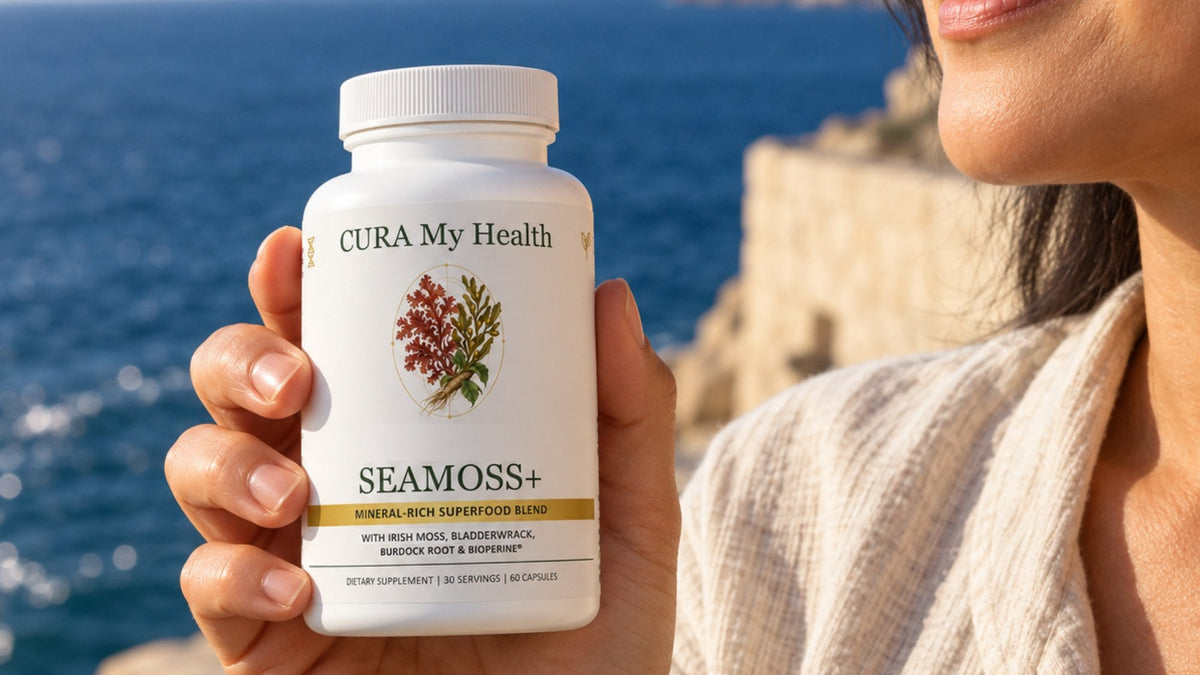
Seamoss+ contains, per two-capsule serving, 500 mg of Irish moss, 500 mg of bladderwrack, 400 mg of burdock root and 5 mg of BioPerine black pepper extract. The Seamoss+ label lists the seaweed amounts, 500 mg of Irish moss and 500 mg of bladderwrack, but not an iodine amount. Because seaweed iodine varies from harvest to harvest, we do not print a number we cannot stand behind; instead, count Seamoss+ alongside your other iodine sources. For scale, the 2021 review's table lists brown seaweeds, fucoids included, at 2,500 to 10,000 mcg of iodine per gram of dried seaweed. At that range, the 500 mg of bladderwrack in one serving would supply about 1,250 to 5,000 mcg, above the 1,100 mcg adult upper limit listed by the NIH Office of Dietary Supplements. Because the label gives no iodine figure, the true amount per serving is not known.
Seamoss+ supports thyroid function and iodine balance and promotes digestive and gut health as part of a daily routine.* Every batch is third-party tested for purity and potency by an outside lab; see our standards for what that covers. The product page carries its own note: Irish moss and bladderwrack are both iodine-rich seaweeds.
Who should check with a clinician first?
The Seamoss+ "Good to know" note says: if you have a thyroid condition, or you take thyroid medication, talk with your healthcare provider before starting. The same applies if you are pregnant, nursing, or managing any other medical condition.
- Thyroid conditions or medication: extra iodine can change how the thyroid behaves, so ask first. The NIH Office of Dietary Supplements notes that people with autoimmune thyroid disease may have adverse effects at iodine intakes considered safe for most people, and that high doses of iodine taken with antithyroid medicines such as methimazole can have an additive effect.
- Pregnancy and breastfeeding: iodine needs are higher, but the source should be planned with your clinician, usually through a prenatal vitamin. The 2021 thyroid review names pregnant women among the groups at particular risk of excess iodine from regular intake of brown seaweeds such as kelps and fucoids, which include bladderwrack. For pregnant women, the review also notes a recommendation to limit brown seaweed to one serving per week. Seamoss+ is taken daily and contains bladderwrack, and its label asks pregnant or nursing mothers to consult a physician before use.
- Several iodine products at once: a multivitamin, kelp tablets and a sea moss product together can add up quickly.
- Children under 18: the label asks for a physician's advice first. For children, the 2021 thyroid review notes a recommendation to limit brown seaweed, the group bladderwrack belongs to, to one serving per week; Seamoss+ is taken daily.
A simple way to add up your iodine
- List your sources: iodized salt, dairy, eggs, seafood, seaweed snacks, multivitamins and any kelp or sea moss product.
- Read each label for an iodine figure in mcg. Where none is given, as with most whole-seaweed products, note that the amount is unknown.
- Avoid stacking seaweed products. Choose one, rather than kelp tablets plus sea moss plus seaweed snacks every day.
- Take it to your clinician if you have any thyroid history; a simple list makes the conversation quick.
The label direction for Seamoss+ is two capsules once a day, 20 to 30 minutes before a meal, and the label also says: Do not exceed recommended dose. Seamoss+ is taken daily and contains bladderwrack, a brown seaweed, so keep the 2021 review's caution about regular brown-seaweed intake in mind. For pregnant women and children, the review notes a recommendation to limit brown seaweed to one serving per week, and the Seamoss+ label asks pregnant or nursing mothers and children under the age of 18 to consult a physician before use. Our guide to the best time to take sea moss capsules covers the routine.
Frequently asked questions about sea moss iodine
Is sea moss high in iodine?
Sea moss contains iodine, but how much varies widely by species, location and processing. Red seaweeds like Irish moss are generally lower than brown seaweeds like kelp and bladderwrack.
Can sea moss affect the thyroid?
Iodine is used by the thyroid, and both too little and too much can affect thyroid function. That is why anyone with a thyroid condition or on thyroid medication should talk with a provider before taking sea moss.
Why don't sea moss labels list iodine?
Whole seaweed is a food-like ingredient whose iodine changes with each harvest, so many products list the seaweed weight instead. Seamoss+ lists 500 mg of Irish moss and 500 mg of bladderwrack per serving.
Can I take sea moss with a multivitamin?
Many people do, but check whether your multivitamin contains iodine and count both. If you take several iodine sources, ask your clinician or pharmacist to look over the list.
Is sea moss safe during pregnancy?
Talk with your healthcare provider first. Iodine needs rise during pregnancy and breastfeeding, and your provider can help plan the right source and amount. A 2021 review in the European Thyroid Journal names pregnant women among those at particular risk of excess iodine when iodine-rich brown seaweeds, such as kelps and the fucoids, are eaten regularly. Bladderwrack is a fucoid. For pregnant women and children, the review also notes a recommendation to limit brown seaweed to one serving per week, and Seamoss+ is taken daily. The Seamoss+ label asks pregnant or nursing mothers to consult a physician before use.
Related reading from our Wellness Hub
- Sea Moss Ingredients: What Is in Seamoss+, Line by Line
- Sea Moss Capsules vs. Gel: Which Form Fits Your Routine?
- Is Sea Moss Good for Gut Health? What the Research Says
Sources
- NIH Office of Dietary Supplements: Iodine, Health Professional Fact Sheet (updated November 2024)
- Smyth PPA. Iodine, Seaweed, and the Thyroid. European Thyroid Journal, 2021
- Teas J, et al. Variability of iodine content in common commercially available edible seaweeds. Thyroid, 2004 (PubMed)
Individual results vary.
*These statements have not been evaluated by the Food and Drug Administration. This product is not intended to diagnose, treat, cure, or prevent any disease.