
What does ginkgo biloba do? Ginkgo leaf supplies two families of plant compounds, flavonoids (antioxidants) and terpene lactones, that researchers have studied for their role in healthy circulation and in memory and thinking. The results are mixed: some smaller studies report benefits on certain memory tasks, while the largest long-term trial found no effect on memory outcomes. Ginkgo is best thought of as a well-studied traditional botanical that supports brain health, with real safety points to know before you start.
Key takeaways
- Ginkgo supplements are made from the leaf of the ginkgo tree, not the seed.
- Research focuses on two compound groups in the leaf: flavonoids and terpene lactones.
- Memory evidence is mixed, and the largest long-term trial was negative.
- Ginkgo may increase bleeding risk, so talk to your provider if you take blood thinners or have surgery planned.
What is ginkgo biloba?
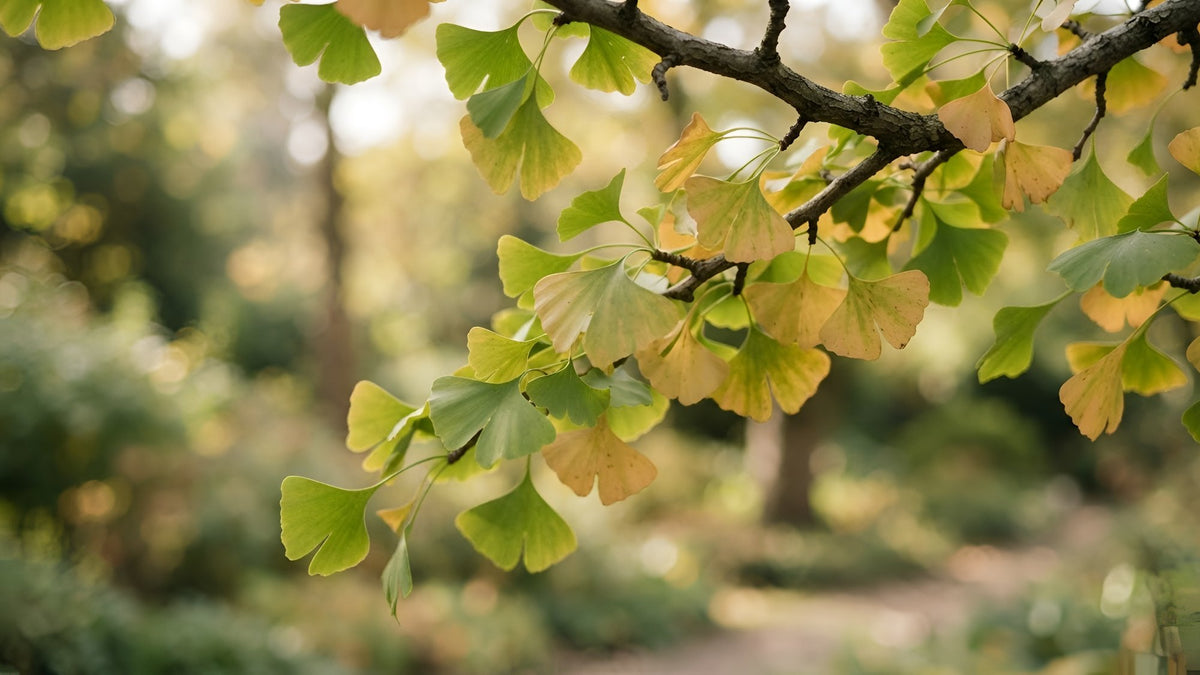
Ginkgo biloba is one of the oldest living tree species, often called a "living fossil" because its family dates back hundreds of millions of years. Its fan-shaped leaves turn bright gold in autumn, and the trees are planted along city streets worldwide because they tolerate pollution well. Ginkgo supplements are made from the leaf of the ginkgo tree, not the seed. The seeds, which are eaten in some traditional cuisines after careful preparation, can be toxic when raw or eaten in large amounts, which is why supplements stick to the leaf.
What does ginkgo biloba do in the body?
Ginkgo leaf contains flavonoids and terpene lactones, the two compound groups most research focuses on. Many leaf extracts are standardized to about 24% flavone glycosides and about 6% terpene lactones so that one batch matches the next.
- Flavonoids are antioxidants, the same broad family found in tea, berries and onions. They help protect cells from oxidative stress.
- Terpene lactones (ginkgolides and bilobalide) have been studied for how they relate to blood flow and platelet activity. That is also why ginkgo carries a bleeding caution.
Put together, ginkgo is traditionally associated with healthy circulation, including blood flow to the brain, and that is the main reason it shows up in focus and memory formulas. Ginkgo leaf has also been used in traditional Chinese practice for centuries, although the concentrated leaf extracts sold today are a modern development of the twentieth century.
Does ginkgo biloba help memory and focus?
The evidence for memory is mixed, and the largest long-term study found no benefit for memory outcomes. Here is a fair summary of what has been studied:
| Type of research | What it found |
|---|---|
| Small trials in healthy volunteers | Some improvements on specific memory or attention tasks, often after single doses or a few weeks; others found no change. |
| The Ginkgo Evaluation of Memory study | An NIH-funded trial of more than 3,000 volunteers followed for about six years found ginkgo did not lower the rate of dementia, including Alzheimer's disease, compared with placebo. |
| Ginkgo combined with Panax ginseng | A 14-week trial reported better scores on a memory index; replication is limited. |
NCCIH sums it up plainly: there is no conclusive evidence that ginkgo is helpful for any health condition. That does not mean ginkgo does nothing; it means the strong claims you see online run ahead of the science. If you choose ginkgo, choose it as one part of a brain-healthy routine that also includes sleep, physical activity, social connection and a varied diet. Our article on brain fog and everyday focus habits covers those foundations.
How is ginkgo used in supplements?
You will usually see ginkgo in one of three forms:
- Standardized leaf extract, labeled with a flavone or flavonoid percentage, such as 24%.
- Ginkgo leaf powder, the dried, ground whole leaf.
- Combination formulas, where ginkgo is paired with ginseng, bacopa or other botanicals.
Our Ginkgo+ uses both leaf forms alongside red Asian ginseng: each two-capsule serving lists 600 mg of ginkgo leaf powder, 120 mg of ginkgo leaf extract standardized to 24% flavones, and 700 mg of red Asian ginseng extract standardized to 7% ginsenosides. It supports brain health and mental performance and supports immune system function.* It is caffeine-free, has no proprietary blend, and every batch is third-party tested for purity and potency (see our standards). The suggested use is two capsules once a day, 20 to 30 minutes before a meal.
For a side-by-side look at ginkgo and other focus botanicals, read our guide to phosphatidylserine, bacopa, ginkgo and huperzine A.
How to choose a ginkgo supplement
- Look for the leaf. Supplements should use ginkgo leaf, never the seed.
- Check for a standardization percentage on any extract, such as 24% flavones, so you know the extract is consistent.
- See what it is paired with. Ginseng, bacopa or caffeine sources change how a formula feels.
- Ask about testing. Third-party testing for every batch confirms purity and potency.
Is ginkgo biloba safe? Side effects and interactions
Ginkgo may increase bleeding risk, so talk to your provider if you take blood thinners or have surgery planned. According to NCCIH, ginkgo leaf extract appears to be safe for most people when taken by mouth in moderate amounts, with these points to know:
- Bleeding: ginkgo may raise bleeding risk, especially with anticoagulant or antiplatelet medicines, or before surgery or dental procedures.
- Medication interactions: ginkgo can interact with some prescription medicines. Bring your supplement list to your next appointment.
- Common side effects: headache, stomach upset, dizziness and allergic skin reactions have been reported.
- Pregnancy and nursing: consult a physician before use.
Frequently asked questions about what ginkgo biloba does
What is ginkgo biloba good for?
Ginkgo is traditionally used to support healthy circulation and brain health. Research has focused on memory and thinking, with mixed results, so it is best viewed as a supportive botanical rather than a quick fix.
How long does it take for ginkgo biloba to work?
Studies have run from single doses to several years. Most people who use it give it several weeks of daily use before judging whether it fits them.
Should I take ginkgo in the morning or at night?
There is no strong evidence for one time over another. Pick a time you will remember and follow your product's label; Ginkgo+ is taken 20 to 30 minutes before a meal.
Can I take ginkgo with coffee?
There is no known problem with ginkgo and an ordinary cup of coffee for most people. If you take medication or have a medical condition, check with your provider about your whole routine.
Who should avoid ginkgo biloba?
People who take blood thinners, have a bleeding concern or have surgery coming up should talk to a healthcare provider before using ginkgo. The same applies during pregnancy or nursing, and for anyone under 18.
Related reading from our Wellness Hub
- Nootropic Blends vs Single Ingredients: How to Read the Label
- How to Beat the Afternoon Slump Without Caffeine
Sources
- NCCIH: Ginkgo
- DeKosky ST, et al. Ginkgo biloba for prevention of dementia: a randomized controlled trial (Ginkgo Evaluation of Memory study). JAMA. 2008.
- Wesnes KA, et al. The memory enhancing effects of a Ginkgo biloba/Panax ginseng combination. Psychopharmacology. 2000.
- Mayo Clinic: Ginkgo
Individual results vary.
*These statements have not been evaluated by the Food and Drug Administration. This product is not intended to diagnose, treat, cure, or prevent any disease.

